Paxos, Greece: How to Get There, What It Costs, Where to Stay
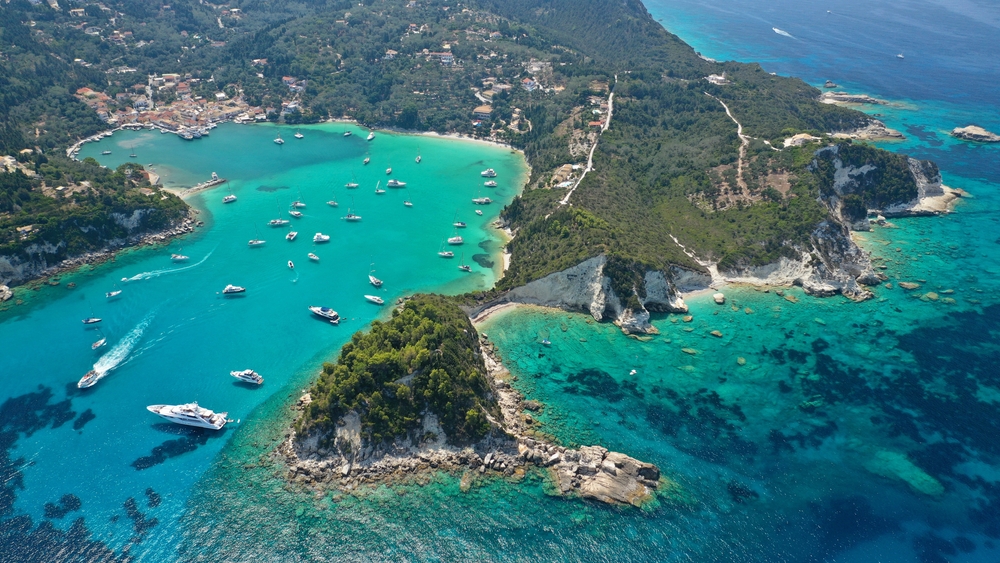
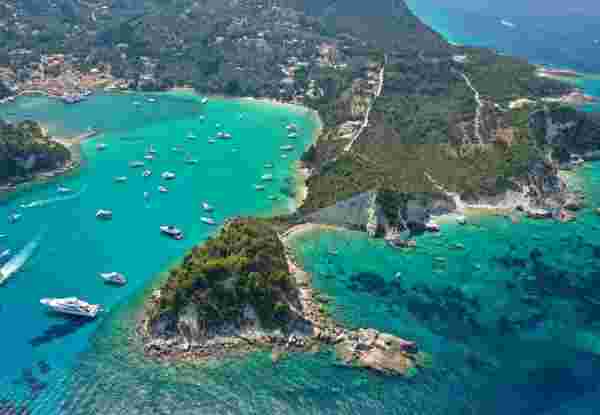
Paxos is a small Ionian island about fifteen kilometres south of Corfu, with no airport, three villages and roughly 2,500 residents. You reach it by boat: fifty-five minutes from Corfu Town by hydrofoil, or an hour and a half from Igoumenitsa on the mainland. Fares run from €5.60 to about €35 depending on the route and the boat. Most people stay four or five nights.
That is the short version. The rest of this guide is the detail nobody publishes: what each ferry actually costs, what a day on the island runs to, and whether Gaios, Lakka or Loggos is the right place to put your bag down.
Greeks call the island Paxoi (Παξοί), in the plural, because the group takes in Antipaxos and a scattering of rocks and islets alongside the main island. In English it is almost always Paxos, so that is what we use here.
How do you get to Paxos?
By sea, always. Four scheduled routes reach the island, and one more is a day cruise that people mistake for a route.
| From | Operator | Time | Adult, one way | Runs |
|---|---|---|---|---|
| Corfu Town | Kerkyra Lines, Ionian Blue Wave | 55 min–1 h 20 | €15 | Year-round, three to seven days a week |
| Lefkimmi (south Corfu) | Kamelia Lines | 45 min | €15 | Year-round, three to seven days a week |
| Igoumenitsa (mainland) | Kerkyra Lines, Kerkyra Seaways | 1 h 30 | €5.60 | Year-round, up to twice daily |
| Lefkada | Lefkada Palace | 3 h | around €12 | Seasonal, a few days a week |
| Parga (mainland) | Excursion boats | Day trip only | Not published | Summer |
Fares checked on Ferryhopper on 2 September 2026. They are booking-engine prices rather than a published tariff, which matters more than it sounds: no operator on this route puts a fare table on its own website. Kerkyra Lines and Kamelia Lines both keep prices behind a booking form, so the only way to see a number is to start a booking.
The Corfu Town crossing is the one most people take. An adult foot passenger is €15 and two adults €30. The fast hydrofoil is quoted higher, up to about €35, so if speed matters in August, budget for that.
Igoumenitsa is the one worth knowing about. At €5.60 an adult it costs a third of the Corfu fare, it is the only route that carries a car, and two adults with a car cross for €34.80. If you are already driving through Epirus, this is your crossing.
Parga is not really a way in. Several guides list it alongside the ferry routes. What leaves Parga is an excursion boat that gives you about two hours ashore in Gaios and then takes you back the same afternoon. Treat it as a day out from Parga, not as transport to Paxos.
One more warning about the cheap Corfu fare. Kamelia Lines sails from Lefkimmi, which is about forty kilometres south of Corfu airport. The ticket saves you money and the transfer takes it back.
There is no airport on Paxos
People search for flights to Paxos every month, and for flights to Gaios, which is a village of a few hundred people. There is no airport and there are no scheduled flights. Private helicopter transfers exist, and that is the whole of it.
The nearest airport is Corfu International, Ioannis Kapodistrias (CFU), which takes direct flights from most of Europe between April and late October. It sits a short ride from Corfu’s New Port, where the Paxos boats leave. City bus number 15 runs between the two; a taxi is €20 to €25 and takes five to ten minutes.
If you are flying, the sequence is: land at Corfu, get to the New Port, take the boat. Give yourself more margin than feels necessary, because there are very few midday sailings and missing the afternoon one means a night in Corfu Town.
What does a trip to Paxos cost?
Most guides answer this with “it depends”. Here are the actual numbers.
| What | Cost | Note |
|---|---|---|
| Ferry, Corfu Town to Gaios | €15 an adult | €30 for two |
| Ferry, Igoumenitsa to Gaios | €5.60 an adult | €34.80 for two adults and a car |
| Taxi, Corfu airport to New Port | €20–€25 | Or city bus 15 |
| Bus, Gaios to Lakka or Loggos | €3.00 | 2024 price, cash to the driver |
| Bus, Lakka to Loggos | €1.80 | 2024 price |
| Taxi, Gaios to Loggos | around €10 | Unmetered, so agree it first |
| Day boat, Gaios to Antipaxos | €25 return | Leaves about 10:00, back around 16:00 |
| Guided boat trip with the blue caves | €43 adult, €22 child | Includes two hours on Antipaxos |
| Private boat for the day | from €600 | Add €100 for a skipper |
The bus fares are 2024 prices, confirmed in two places, and we could not find a 2026 update. The taxi figure comes from a single undated source, so treat it as indicative. Everything else was checked on 2 September 2026.
Two habits will keep the daily spend sensible. Take the bus rather than taxis, because the circular route links all three villages and a ticket costs about the same as a coffee. And do the Antipaxos day boat rather than the guided trip unless you specifically want the blue caves, because the difference is €18 a head for a stop you can also make on a cheaper island tour.
Where Paxos does get expensive is accommodation in August, and boat hire. A day on the water with your own skipper is a luxury and priced like one. Everything else on the island costs what it costs anywhere in Greece.
If the sums are the part you would rather not do, it is the part we do: we build tailor-made trips across Greece with the ferries, the villa and the boat day already costed and booked.
Is Paxos worth visiting?
Yes, if you want a small island where the day has no agenda. No, if you need variety, nightlife or a list of sights to work through.
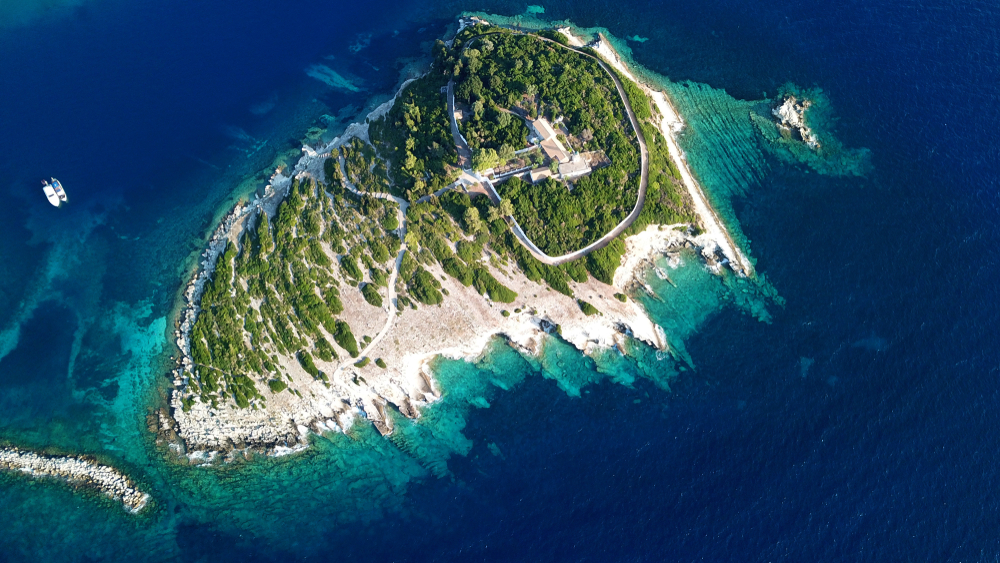
Paxos is about 10 kilometres long and no more than 3 wide, with 25.3 square kilometres of land and 2,466 residents at the 2021 census. Its highest point, Agios Isavros, reaches 231 metres. You can drive from one end to the other in under half an hour. There is one road of any size, three harbours, a great many olive trees and no archaeological site that anyone travels for.
What it has instead is water. The east coast is a run of small pebble coves in sheltered bays; the west is a wall of white cliffs with sea caves cut into it, and you see that side from a boat or not at all. The three villages are working harbours rather than resorts, and the cafés on the quay are used by the people who live there.
Be honest with yourself about the pace. Visitors who love Paxos tend to describe doing very little in considerable detail. Visitors who are disappointed usually arrived expecting a smaller Corfu and found somewhere quieter than they bargained for.
It is worth knowing that “quiet Greek island” describes two completely different places. Paxos is green, low and wooded. Symi, on the far side of the country, is bare rock with a painted harbour stacked up the cliffs. Both are quiet. They look nothing like each other.
A note on the numbers above, because they are wrong in most of the guides you will read next. Several of the biggest give the island as 76 square kilometres, roughly three times its real size. That figure is the municipality, and the municipality takes in Antipaxos and the islets as well. Two more put the highest point at 248 metres, which is higher than anything on Paxos.
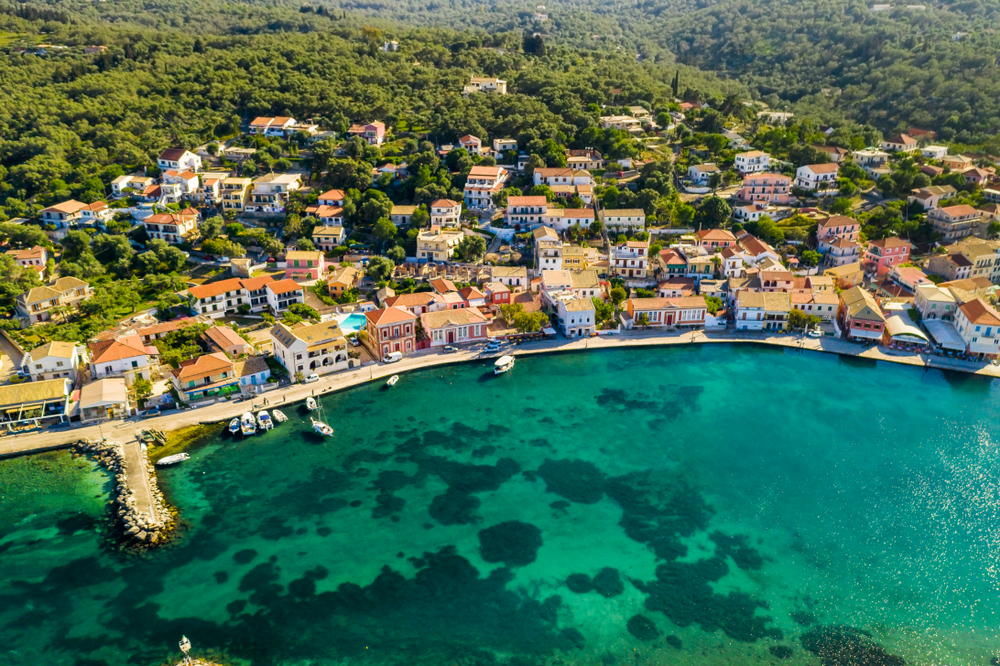
Gaios, Lakka or Loggos: where to stay
This is the only real decision you make about Paxos, and the three answers are not variations on each other.
| Gaios | Lakka | Loggos | |
|---|---|---|---|
| What it is | The capital and the ferry port | A wide bay at the north end | A small harbour between the two |
| Size | Biggest, most shops and tavernas | Middling, a proper village | Smallest, a single quay |
| Good for | First visit, no car, arriving late | Swimming, sunsets, families | Eating well, doing nothing |
| Against it | Busiest, and the port traffic shows | Furthest from the ferry | Very little to do after dinner |
| Bus to Gaios | — | 30–45 min | 20–25 min |
Gaios is where the boat drops you, and it is the practical choice if it is your first time or you are not hiring anything with wheels. The harbour is a narrow channel with a wooded islet, Panagia, sitting across the mouth of it, which is why the water is always flat. It has the most tavernas, the bank, the pharmacy and the supermarkets. It also has the ferry crowds twice a day.
Lakka sits in a broad horseshoe bay at the northern tip, and it is the swimming base. The bay is shallow and sheltered, there are boats to rent on the front, and the sunsets from the western side of the headland are the ones people photograph. It is the furthest from the port, which is a small tax on arrival day and a benefit thereafter.
Loggos is the smallest of the three and the one people fall for. It is a single curve of quay with tavernas along it and almost nothing else, backed by an old olive press building. If your ideal evening is a long dinner two metres from the water and then bed, stay here.
Accommodation on Paxos is mostly villas and apartments rather than hotels; proper hotels number fewer than a dozen. In July and August it books out months ahead, which is not a sales line but a consequence of an island this size.
Getting around once you are there
There is a bus, and it is better than its reputation. It runs a circular route linking Lakka, Loggos and Gaios several times a day in summer, and you buy a one-way ticket from the driver in cash. Gaios to Loggos takes about 20 minutes, Gaios to Lakka about 30. Timetables vary between sources and between seasons, so check the board at the stop rather than a website.
Taxis exist, are unmetered and charge a fixed price by route. Agree the fare before you get in. Gaios to Loggos is around €10.
Renting a car is worth it for a day rather than a week. The island is small, the roads are narrow, and parking in Gaios in August is a sport. Scooters and quad bikes are widely available, but check what your licence covers before you book one: in Greece a car licence gets you a 50cc moped and no more, and rental agents do ask.
The best way to see Paxos, though, is to rent a small boat. No licence is needed for the low-powered ones, they go from all three harbours, and the entire west coast is unreachable any other way.
Antipaxos, and how to get there
Antipaxos is a much smaller island about three kilometres south of Paxos, with a permanent population you could count on your fingers, no hotels, no shops and no roads worth the name. It has vineyards, two extraordinary beaches, and a few tavernas that open for the season and shut again.
Day boats leave from the main square in Gaios at around ten in the morning, take about fifteen minutes, and come back around four. The fare is €25 return and you buy the ticket at the quay. A guided trip via the blue caves costs more and gives you about two hours ashore rather than six.
The two beaches are Vrika and Voutoumi. Vrika is white sand with water that turns a colour most people assume has been edited. Voutoumi is longer, pebbly, and has a taverna on the hill above it. A path over the headland connects the two, so you can swim at one and walk to the other.
Two practical things. You cannot take a car, ever, and nobody offers to. And in the shoulder season the tavernas close before the boats stop running, so take something to eat if you are travelling in October.
The boat trip round the west coast
If you do one thing on Paxos that costs money, do this.
The west coast is a line of white limestone cliffs, undercut by the sea into caves and arches. There is no road along it and no beach to walk to. Boat trips run from all three harbours, take about an hour of actual sailing with as many swimming stops as you want, and pass the blue caves, where the light coming through the water underneath turns the inside of the cave a colour that does not look real.
The other landmark on this coast is the Tripitos Arch, a natural rock arch over twenty metres high, reachable on foot as well: a walk of ten to fifteen minutes from where the track ends, and then a view straight down.
Erimitis is the cliff section at the northwest, and it is the sunset spot on the island. There is a bar and restaurant above it. The path down to the beach is steep and short, and it is worth doing once.
The beaches
Paxos has coves rather than beaches, and almost all of them are pebble. The east coast is where you swim.
- Levrechio, below Loggos, is the easiest good one: sheltered, a short walk, a taverna behind it
- Monodendri, north of Loggos, is the largest on the island and has Ben’s Bar at the back of it
- Kipiadi takes a walk down a track and rewards it with clear water and very few people
- Harami, near Lakka, is a short swim or walk from the village
- Mongonissi, at the southern tip, is one of the only sandy ones and the most family-friendly
- Plani and Marmari are quieter still and need either a boat or some determination
For sand, go to Antipaxos. That is where it is.
What to eat, and what it costs
The food here is Ionian, which means it is not the Greek food most visitors expect. Corfu and Paxos were Venetian for four centuries and never Ottoman, and the cooking shows it: sofrito, veal in a garlic and white wine sauce; pastitsada, meat in a spiced tomato sauce over thick pasta; bourdeto, fish stewed with a great deal of red pepper.
Three that come up again and again: Vasilis in Loggos, Ben’s Bar at Monodendri beach, and the restaurant at Erimitis for the sunset. Opening dates in the shoulder season are a live question every year, so check before you plan an evening around one.
Expect ordinary Greek-island prices rather than Cycladic ones. The harbour-front places in Gaios are the dearest on the island and the village tavernas a street back from the water are not. Bottled water is around a euro for a large bottle, which most visitors buy rather than drink from the tap.
Paxos or Corfu?
They are under an hour apart and they are not alternatives.
Corfu has an airport, a UNESCO-listed old town, several hundred thousand residents, mountains, and enough coastline to hold resorts of every kind alongside places nobody goes. If you want a fortnight with variety, a car, museums, nightlife and a choice of beach every day, Corfu is the answer.
Paxos has one road, three villages and 2,466 people. If you want a week where the biggest decision is which cove, Paxos is the answer.
The best version, if you have the time, is both. Fly to Corfu, spend a few days there, take the hydrofoil south and slow down. That way you also solve the arrival problem, because you are not trying to make an evening ferry after a delayed flight.
Go to Corfu instead if you are travelling with teenagers who will be bored, or in winter, when much of Paxos is shut. And if neither is quite it, the Dodecanese out towards Turkey are a different country again: drier, browner, and built by the Knights and the Italians rather than the Venetians.
When to go
The season runs roughly from late April to mid-October, and the shape of it matters more here than on a big island, because when Paxos closes, it closes.
June and September are the best weeks. The sea is warm, the tavernas are all open, the ferries run their full timetable and the villages are busy without being full.
July and August are hot, expensive and booked out. Accommodation goes months ahead and the Corfu boats fill. If you have left it late and you are looking at the 15 August weekend in particular, we keep a guide to where to go at short notice around 15 August, because Paxos will not have a bed left.
May and early October are lovely and come with a caveat: not everything is open, and the ferry schedule thins out. Travellers arriving in early June have found the full summer timetable not yet running and had to pay for a private transfer to reach Igoumenitsa. In October the Antipaxos tavernas shut before the boats stop.
Winter is for residents. The Corfu and Igoumenitsa boats both run all year, but sailings thin out and bad weather cancels them, and most of the tavernas and rooms are shut.
Who Paxos suits
It suits couples, families with young children, walkers, people who read, and anyone whose idea of a holiday is the same taverna four nights running. It suits sailors especially, and in August the harbours show it.
It does not suit anyone who needs nightlife, teenagers who want something happening, travellers on a tight schedule who cannot absorb a weather day, or first-time visitors to Greece who want the postcard version. Paxos is green and Venetian, not white and blue.
If that sounds right but the timing does not, the same kind of island works earlier in the year too; our list of under-the-radar Greek destinations for spring covers the ones that are open in April and May.
Choosing Paxos
The whole island turns on one decision, and it is not which beach. It is whether you want the kind of week where the day fills itself. Paxos is small enough that you will have seen it in three days and pleasant enough that people come back for twenty years.
The practical version: fly to Corfu, take the hydrofoil, stay in Loggos or Lakka, rent a boat for one day and take the bus the rest, and give yourself five nights. That is the trip.
The one thing worth paying somebody for is the joining up: the flight, the boat that meets it, the villa in the right village, and a plan for the day the wind gets up. That is what we do, and it is what people tell us afterwards mattered:
“…had quite specific ideas about how we wanted to spend our two weeks in Greece. Elena happily helped us develop an itinerary suited to our needs: Crete, Santorini, Athens, Delphi, Pelio, Meteora, and Corfu.”
— B S, TripAdvisor, 18 June 2024
Multi-stop Greek trips are the ones that go wrong on the connections, and Paxos adds a ferry to every one of them. If you would rather not hold that yourself, we plan Greek trips island by island, Paxos included.
Frequently asked questions
Does Paxos have an airport?
No. Paxos has no airport and no commercial flights. The nearest is Corfu International (CFU), a short ride from Corfu’s New Port, from where boats reach Gaios in fifty-five minutes. Private helicopter transfers are the only way to arrive by air.
Is Paxos an expensive island?
Not especially, apart from summer accommodation. The bus costs €3, a taxi between villages around €10, and the day boat to Antipaxos €25 return. Ferry fares run from €5.60 from Igoumenitsa to €15 from Corfu. Villas in July and August are where the money goes.
Which is better, Paxos or Corfu?
Different jobs. Corfu has the airport, the old town, the variety and the nightlife, and suits a fortnight with a car. Paxos has three villages and 2,466 residents, and suits a quiet week. Many people do both, since the crossing takes about an hour.
What was filmed on Paxos?
The Netflix series Maestro in Blue was largely shot on Paxos, using Gaios harbour, the waterfront at Loggos, the old school at Lakka, the Erimitis cliffs and Voutoumi beach on Antipaxos. The Durrells, frequently miscredited to Paxos, was filmed on Corfu.
Is Paxos a good island to visit?
Yes, if you want a small, green, quiet island with exceptional water and very little to do. If you want sights, nightlife or variety, choose a bigger island; Paxos is 25 square kilometres with one main road.
How many days do you need on Paxos?
Four to five nights is the usual answer and a good one. That gives you a day for each village, a day on a boat around the west coast, and a day on Antipaxos, with time left to do nothing. A week suits people who genuinely want to stop; two is a lot.
Feeling Ready?
From our blog
Aliki Beach, Paros: Three Beaches, One Name
READ MORE
Ioannina, Greece: The Lake City Between Athens and Corfu
READ MORE
Kalamata, Greece: How to Get There, What to See, When to Go
READ MORE
Logaras Beach, Paros: Where to Swim When the Sun Bites
READ MORE
Athens to Santorini: Ferry or Flight? (2027 Guide)
READ MORE
Athens to Santorini: Ferry or Flight? (2027 Guide)
READ MORE
Piso Livadi Beach, Paros: Sand, Tavernas and the Boat Out
READ MORE
Aegina, Greece: A Practical Island Guide (2026)
READ MORE
Spetses, Greece: Everything you need to know (2026)
READ MORE