Things to Do in Rome: Your Ultimate Guide
Choosing things to do in Rome is the delightful dilemma every visitor has to deal with. Rome has three thousand years of history and is remarkably walkable. Ancient ruins stand next to magnificent Baroque fountains, and the scent of espresso drifts past Renaissance churches. The problem is not finding things to do, but choosing among them.
This guide will cover the most famous landmarks, the best free things to do, and some of the most fun and unique places to visit. We will also share suggestions for families with children, couples, a three-day itinerary, and practical tips on reservations, dress codes, and the best time to visit Rome.

How Many Days to Spend in Rome to See the Highlights
Plan to spend three full days visiting all the major attractions in Rome, such as the Colosseum and Roman Forum, Vatican City, and the fountains and piazzas of the historic centre, at a leisurely pace. Two days can work if you have very limited time, while four to five days is ideal if you want to discover hidden corners, lively neighbourhoods, and enjoy those long Roman lunches that are such an important part of the local culture while exploring Rome at a slower pace.
Best Things to do in Rome
Rome is one of the best places to visit in Italy, where every corner holds a story and the city’s top sights combine history, art and vibrant culture. From walking in the footsteps of gladiators at the Colosseum to standing beneath the breathtaking ceiling of the Sistine Chapel, the Eternal City offers unforgettable experiences at every turn. Explore ancient ruins, admire Renaissance masterpieces, or enjoy local life in its bustling piazzas and markets. These must-see attractions capture the spirit of Rome, showcasing both its glorious past and its lively present.
The Colosseum, Roman Forum & Palatine Hill
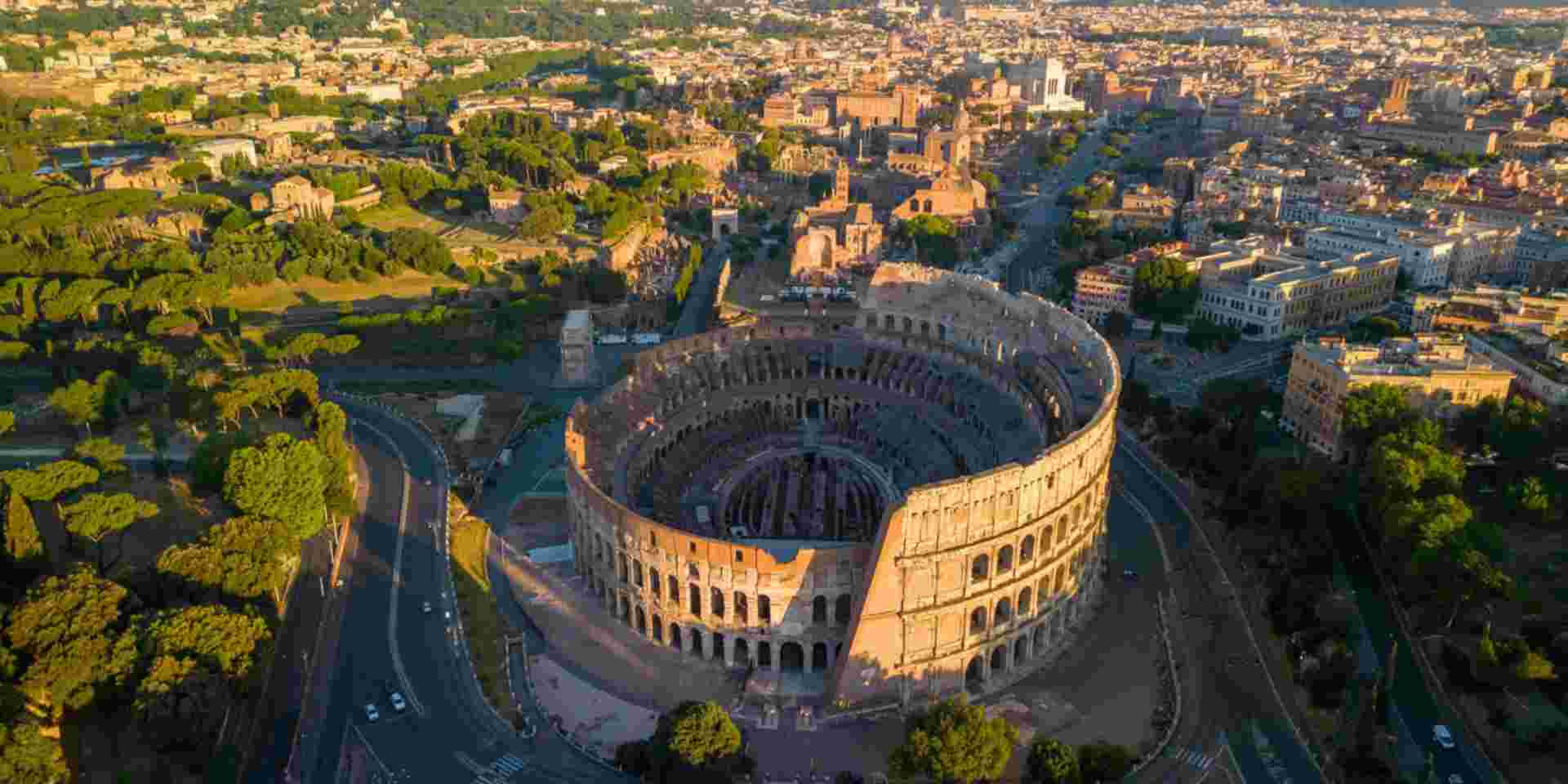
One ticket for the three main ancient sites of Rome enables you to visit all of them at once. The Colosseum, which was started during the reign of Emperor Vespasian and inaugurated by his son Titus in 80 CE, was able to accommodate some 50,000 spectators attending gladiator battles and animal hunts. The top gladiators were regarded as highly skilled and valuable athletes.
Next to it, the Roman Forum was the center of all political and social life in the empire. Strolling through the ruins of the Senate House and the Temple of Saturn, you can picture daily life in ancient Rome. From there, you can climb Palatine Hill, where emperors built their palaces. The hill offers some of the best views of the Roman Forum and Circus Maximus. Make sure you purchase your ticket with a timed entry in advance, since it often sells out. Also consider joining a guided tour to access the arena floor or the underground hypogeum.
Vatican Museums & the Sistine Chapel
Home to one of the largest and finest art collections in the world, the Vatican Museums lead visitors to the same grand finale: Michelangelo’s Sistine Chapel, famous for its ceiling frescoes and the monumental Last Judgment. This is Rome’s most visited attraction, and during peak hours, the galleries can feel extremely crowded. It is advisable to reserve a timed-entry ticket and choose either the first slot of the day or a late-afternoon entry.
There is a strict dress code, so make sure shoulders and knees are covered. Photography is not permitted inside the Sistine Chapel, and visitors are expected to remain silent. To fully appreciate the artwork and its significance, a knowledgeable guide is well worth considering.
St Peter’s Basilica
Stepping inside St. Peter’s Basilica is a moment many visitors never forget. It offers a powerful sense of the scale and importance of the Catholic Church. The basilica’s magnificent dome, designed by Michelangelo, dominates the interior, while the intricate mosaics and the famous Pietà create an atmosphere of awe and reflection.
As you walk through the vast interior, you will encounter remarkable works of art and monuments that reflect centuries of religious and artistic history. Whether you are interested in architecture, history, or faith, St. Peter’s Basilica is one of the most impressive sights in Vatican City and should not be missed.

The Pantheon
One of the best ways to see how amazing ancient Rome was is to visit the Pantheon. This church shows us the smart ideas that the ancient Romans had. The big round dome will grab your attention. It has given new ideas for many other buildings over time. The hole in the middle of the dome lets in sunlight, making the space beautiful. When you step inside, you feel the deep history of the Catholic Church and the Roman Empire. It is the place where important people, like the painter Raphael, have been laid to rest. As you look up, you can see the work of Michelangelo and think about how much he gave to the world.
Trevi Fountain
Legend says that if you throw a coin into the Trevi Fountain, you will come back to the Eternal City. This simple Roman custom has you stand by the fountain and think about your wishes. You toss your coin with your right hand, over your left shoulder. The Trevi Fountain is a beautiful sight. Nicola Salvi made this Baroque fountain, and you can see amazing sculptures and waters that seem to move. It has a mood that draws people in. While you are there, know that this place stands for hope and adventure. That is one reason it is one of the best places to see when you visit Rome. Take some time to get a good photo of this moment at the Trevi Fountain in the Eternal City!
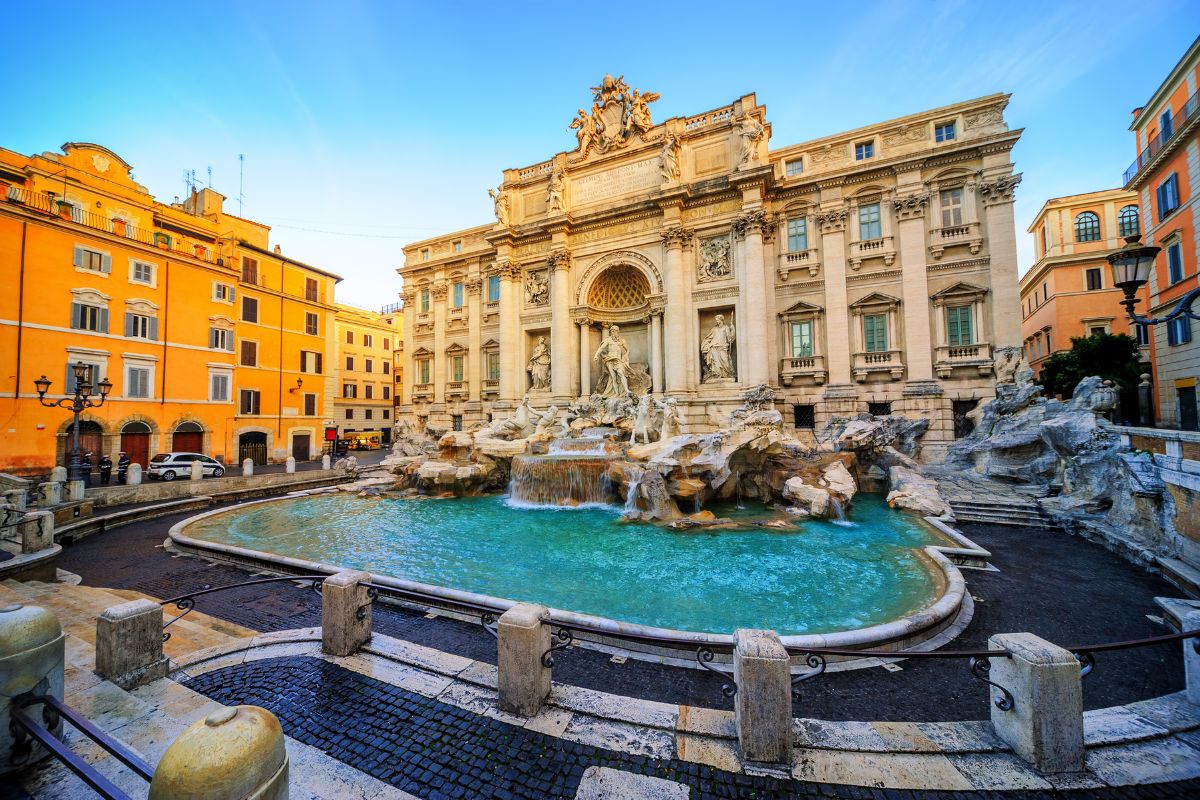
Galleria Borghese & Villa Borghese
The Galleria Borghese is a hidden gem inside one of the most beautiful parks of Rome, Villa Borghese. It is the best small museum in the city and frequented by locals who know their art well. Here you can find the magnificent sculptures of Bernini that are so lifelike that it’s like the marble is breathing.
Besides the sculptures, there are paintings by Caravaggio, Raphael, and Titian. Since the museum has limited entry by timed two-hour slots, tickets are often sold out well ahead of time, so make sure to book yours before your flight. Villa Borghese is a vast green area that is usually compared to New York’s Central Park, and it is right outside the museum. You can rent a rowboat on the small lake, ride a bike along the tree-lined paths, or walk to the Pincio Terrace for one of the best free sunset views over the city. It will definitely help you forget the hustle and bustle of the crowded centre.
Piazza Navona & the Spanish Steps
Among Rome’s best-loved open-air landmarks, two of them are located very close to each other in the city center and both can be visited for free. Piazza Navona, which was constructed on top of the ancient Stadium of Domitian, has retained its long oval shape. Bernini’s Fountain of the Four Rivers stands in the center of a lively square filled with cafes, street artists, and portrait painters.
Just a few minutes’ walk away, the Spanish Steps, a flight of 135 steps, rise from Piazza di Spagna to the Trinità dei Monti Church, which is also the place where visitors are gifted with a rooftop view. One must-know rule is that sitting on the steps is now prohibited, and violators can be fined, so you can admire the steps either while standing or from a nearby cafe.
Castel Sant’Angelo
Castel Sant’Angelo was first built to be a tomb for Emperor Hadrian. Now, it stands strong and reminds people of the history of the Eternal City. The round shape of this fortress is easy to spot. It lets you get a look at how people lived in ancient Rome. Going up to the top, you can see amazing views of the Tiber River, the Vatican, and the Rome skyline. Inside, the art and design, with beautiful wall paintings and statues, make the place even more cherished. Taking a guided tour is a great way to learn how Castel Sant’Angelo changed from a tomb to a fortress for popes. This can help you get more from your visit to the Eternal City.
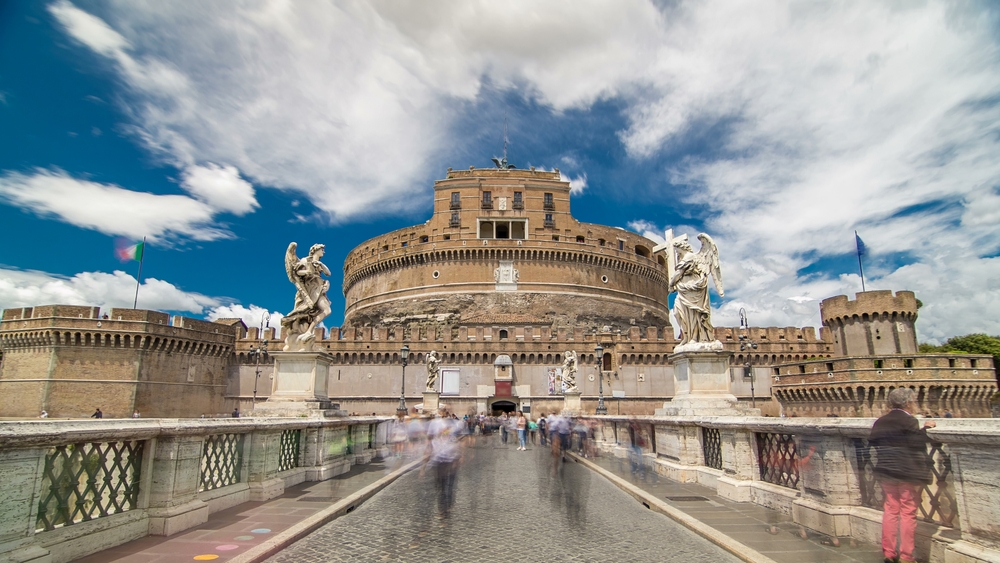
Castel Sant’Angelo and Ponte Sant’Angelo with visitors crossing the bridge in central Rome.
Santa Maria Maggiore & the Tomb of Pope Francis
Since April 2025, Santa Maria Maggiore has been attracting another wave of visitors as it was chosen by Pope Francis to be his final resting place instead of the Vatican, which had not witnessed a pope’s burial outside its walls for more than a century. His grave is extremely humble, bearing only the inscription “Franciscus.” The church is one of the four major papal basilicas in Rome and dates back to the 5th century.
Besides the beautiful Byzantine-style mosaics depicting the story of Christ and the Virgin Mary, there is also a coffered ceiling that is said to be decorated with the first gold that came from the Americas. Admission is free, and it is a quiet, golden refuge amidst the hustle and bustle of the streets near Termini.
Sant’Ignazio’s Trompe-l’œil Ceiling
Most people don’t even glance at Sant’Ignazio as they pass by, which is exactly why this church is on our list. When you look up, you will see the ceiling disappearing into an open sky with figures ascending toward the heavens. It is a perfect illusion of depth and perspective created by the Jesuit painter Andrea Pozzo in the 1680s.
The most amazing part of it all is the “dome”: a fictitious dome that Pozzo cleverly painted on a flat surface after the church ran out of funds to construct a real one. From the marble disc on the floor, the painted dome looks three-dimensional, but if you move to the side, the illusion breaks down and you see a distorted smear. Entry is free, the church is rarely crowded, and it is only a short walk from the Pantheon, making it one of Rome’s most overlooked artistic treasures.
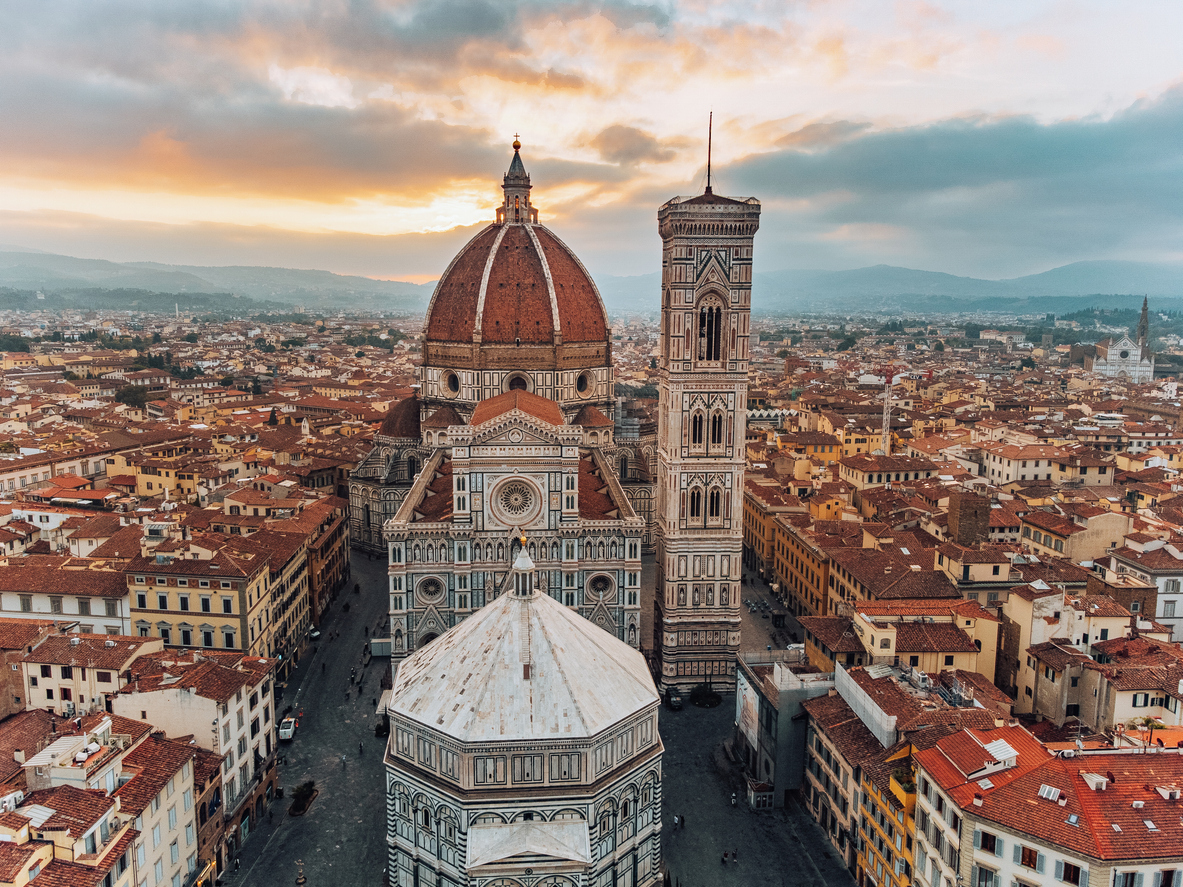
Aerial view of Piazza del Duomo in Florence, Italy. Duomo di Santa Maria del Fiore, the famous Cathedral of Florence during sunrise.
Top Things to Do in Rome for Foodies
Eating in Rome is like sightseeing. Rome’s food culture is very local, centered around a handful of classic pasta dishes, pizza by the slice, and proper gelato, and the best way to enjoy it is slowly. Here is how to eat like a Roman, discover the city’s aperitivo and coffee rituals, and explore the neighbourhoods that are worth saving your appetite for.
Eating Like a Roman
Simple dishes with just a few quality ingredients are the basis of Roman cuisine. The holy trinity of pasta consists of carbonara (egg, pecorino, guanciale, and black pepper, with no cream), cacio e pepe, and amatriciana, made with tomato and guanciale. For a quick lunch, try pizza al taglio, sold by weight and usually eaten standing up, or a fried rice ball known as supplì.
Do not forget to try gelato from a proper gelataio, one of the small pleasures that can be enjoyed without adding much to your overall trip to Italy cost. Giolitti and Fatamorgana are among the best-known options, while Otaleg in Trastevere is a local favourite. As a general rule, choose a simple trattoria with a short menu, avoid restaurants displaying food photos outside, and pick gelato with natural, muted colours rather than bright neon shades.
Aperitivo, Wine & Coffee
The locals of Rome often enjoy a drink at both the beginning and the end of the day, and joining them is one of the easiest ways to experience the city like a local. Late afternoon is the ideal time for aperitivo, when a spritz, Negroni, or glass of wine is served with small snacks, usually from 6 PM onwards in bars throughout Trastevere and the historic centre.
Consider a wine tasting at an enoteca to sample Lazio varieties such as Frascati and Cesanese, often accompanied by cheeses and cured meats. Finally, don’t miss the Roman coffee ritual. Espresso is typically consumed standing at the bar, where it is cheaper, and cappuccino is traditionally ordered before noon. Ordering one after a meal is perfectly acceptable, but it immediately identifies you as a visitor.
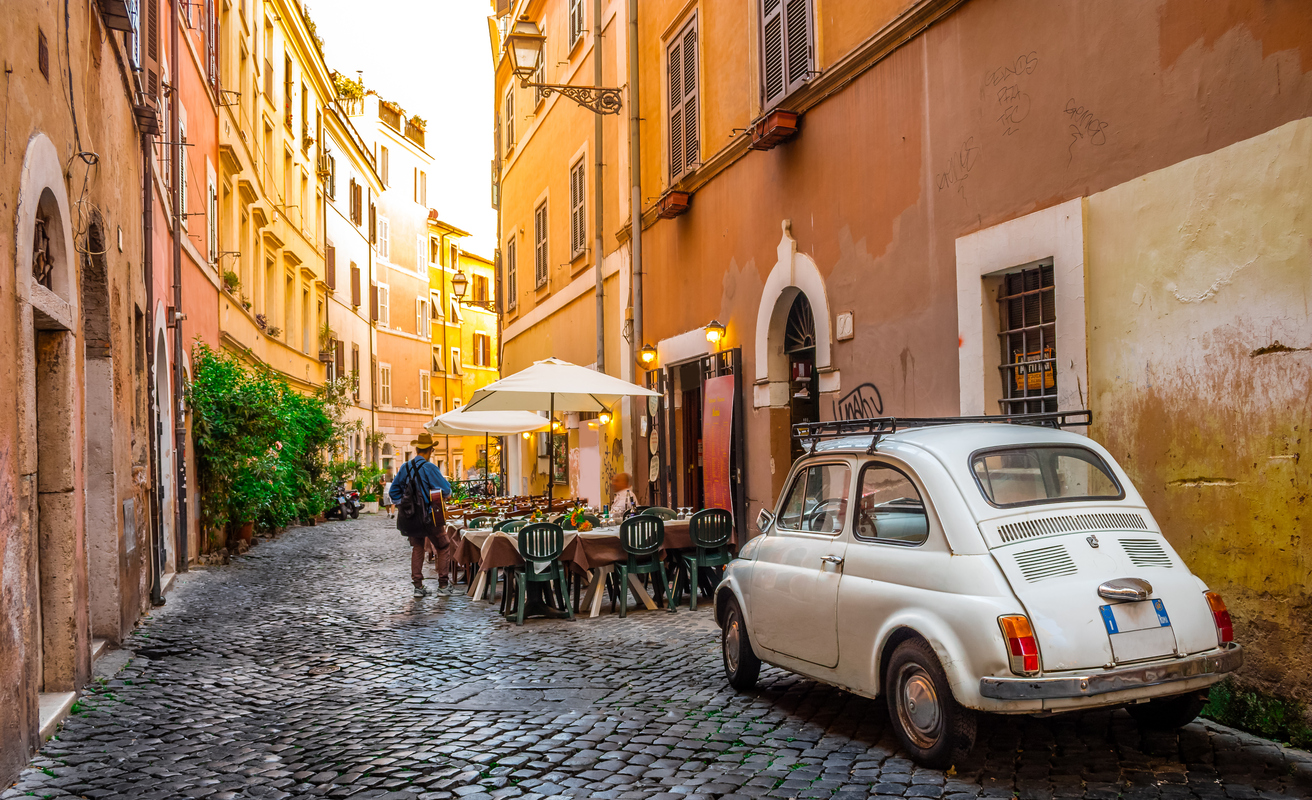
An Evening in Trastevere or Testaccio
Once the sun goes down, Trastevere and Testaccio become two of the best places in Rome for dinner.
Trastevere, located across the river, offers the more picturesque experience. Its ivy-covered streets, candlelit restaurants, and lively squares create a romantic atmosphere that attracts both locals and visitors.
For a more local evening, head to Testaccio, often considered the food district of Rome. Here, a former slaughterhouse has been transformed into restaurants, bars, and nightlife venues serving traditional Roman dishes, including offal-based specialties for adventurous diners. Nearby, the Jewish Ghetto is the best place to try carciofi alla giudia, whole artichokes fried until the leaves become crisp and golden.
Popular restaurants often require advance reservations, and it is worth remembering that Romans typically sit down for dinner after 8 PM.
If you want to experience the city beyond the major attractions, a custom Rome itinerary can help you combine iconic sights, local food experiences, and lesser-known neighborhoods in a way that suits your travel style.
Free Things to Do in Rome
Some of the best attractions in Rome can actually be enjoyed without spending a penny. Stand a few feet away from priceless Caravaggios, ascend to breathtaking viewpoints, and stroll Baroque squares, all for free. See the list of free things to do in Rome that you can use as a starting point and inspiration for your sightseeing: from churches with amazing masterpieces to free views that Rome offers at its best.
Free Churches Hiding Masterpieces
Most of the churches in Rome are free and also work as the city’s finest art museums. You will find three Caravaggio paintings depicting the life of St. Matthew in a small chapel in San Luigi dei Francesi. There is a light box if you want to see the paintings in glow (you can just drop a coin).
Not far away, Santa Maria del Popolo has two more striking Caravaggios and a chapel by Raphael, while Michelangelo’s impressive Moses with the horns can be seen at San Pietro in Vincoli. Besides that, you can also freely enter the magnificent and richly decorated basilica of Santa Maria Maggiore which, among other things, houses the tomb of Pope Francis. Few coins for the light boxes are a good investment, while a proper outfit (with covered shoulders and knees) is a must.
Free Viewpoints
You’re not required to be on a rooftop bar to get the best vistas of Rome. On the Janiculum Hill (Gianicolo), over the hill of Trastevere, a broad terrace affords a view of the entire historic center. Plan your visit around noon, the time when a cannon is fired every day. Meanwhile, on the Aventine, the Orange Garden offers a perfect picture of a sunset over the rooftops and St Peter’s dome. Next to it is the most unusual view in the city: look through the keyhole of the Knights of Malta’s green door and St Peter’s dome will be exactly centered at the end of a hedge-lined avenue. All these three are free. Still, you might have to wait a bit if there’s a queue at the keyhole.
Squares & Monuments That Cost Nothing
Most of Rome’s charm comes from sights that are outdoors and available to everyone. Toss a coin into the Trevi Fountain, climb the Spanish Steps, and just roam Piazza Navona without the need to spend money. Entry to St Peter’s Basilica is free (there is only a charge for climbing to the dome).
At Largo di Torre Argentina, you can see, for no charge, Caesar’s assassination site ruins and currently, it is also a haven for cats. For a wide view of the city, you can ascend the white marble terraces of the Vittoriano. The lower parts cost no money and only the very top glass lift needs a ticket. One drawback: the Pantheon is charging €5 whereas the magnificent piazza is still free.
Free Museum Days
Italy’s state-run museums and archaeological sites, in line with their Domenica al Museo program, are offering free entry on the first Sunday of each month. This can include places like the Colosseum, Roman Forum, Palatine Hill, and Castel Sant’Angelo. But, for the Colosseum, the free Sundays are generally only available from October to March, so don’t rely on that without checking.
The compromise is clear: these days are very popular, waiting lines are long, there is no possibility to book a skip-the-line ticket, so get there at opening time. If your vacation does not coincide with a first Sunday, smaller civic sites and all of Rome’s churches remain free throughout the year. Always double-check the current dates and regulations before going.
Things to Do in Rome with Kids
If you work out a good plan, there are lots of things to do in Rome with kids that don’t just involve dragging them around ruins, making the city a fantastic destination for family travel in Italy. The secret is to integrate major landmarks with interactive history, spacious parks for children to run around and, of course, a couple of rainy-day ideas. This is a guide to keep people of all ages happy and entertained, from toddlers to teenagers.
Hands-On History for Kids
If you’re wondering what to do in Rome with kids, interactive experiences are often the best option, as children tend to remember history far better when they can actively take part in it. At the Gladiator School on the Appian Way, kids can dress up and learn how to use swords from trainers in historical costumes. It may well be the most fun a family can have with Roman history.
Test their honesty at the Mouth of Truth (Bocca della Verità), the huge marble face that, as legend says, bites the hands of liars. They can also pet the friendly stray cats living among the ruins at Largo di Torre Argentina. Another great choice is Castel Sant’Angelo. Children will enjoy climbing up the spiral ramp and tunnels to the rooftop for the view. When it comes to the Colosseum, a family or gladiator-themed tour will do the trick to capture their attention.
Parks, Animals & Rainy-Day Backups
The gigantic garden is equipped with rowing boats on the lake, bikes and pedal carts for rent, a small train, as well as the San Carlino puppet theatre, showcasing why Italy with kids can be far more varied than simply visiting historical sites. Also, inside the park is Bioparco, Rome’s zoo, where around 200 kinds of animals can be seen.
Explora is an interactive children’s museum for kids under 12, located near Piazza del Popolo, and it is ideal for rainy days, whereas the Welcome to Rome multimedia show takes the entire family on a journey through 3,000 years of history in less than an hour. And if everything else fails, a gelato will most likely fix your mood.
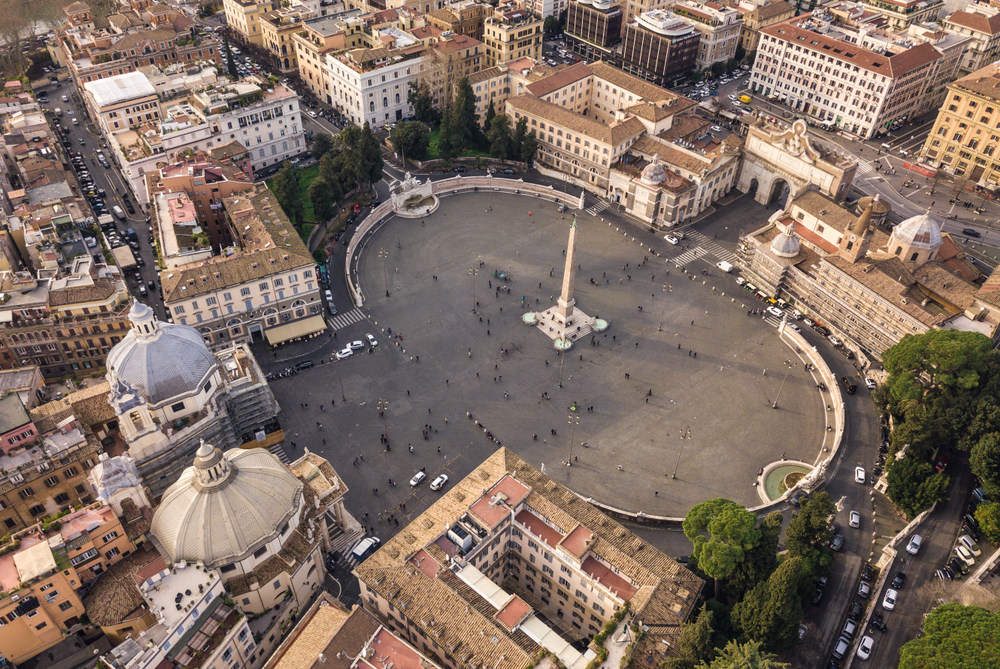
Unique Things to do in Rome
Besides the well-known landmarks, the most unforgettable and also most enjoyable things to do in Rome are the ones where you become a real player. Ditch your audio guide for a sword, a horse, or a wooden spoon. These do-it-yourself activities reveal the true life of the city and will be the stories you’ll still be telling to others when back home.
Train as a Gladiator
In the Gladiator School of Rome’s Historic Group along the Appian Way, you can dedicate a couple of hours to learn how to fight like a real gladiator, working with wooden swords, getting the hang of a few moves, and stepping in a sand arena. Though it’s mainly designed for kids, adults can have just as much fun, and a certificate is awarded to you as an honorary gladiator.
Take a Cooking Class or Food Tour
Even the best of Roman cuisine can get a whole lot better when you know the ins and outs of making it. A cooking course is one of the most fun things to do in Rome and it allows you to learn how to make fresh pasta, and create a proper carbonara or cacio e pepe before enjoying the fruits of your labor. Would you rather eat than cook? With a food tour, you get to try different foods while walking through a neighborhood like Testaccio or the Jewish Ghetto, tasting supplì, cheese, and gelato with a local who will show you the best places.
See Rome by Vespa or E-Bike
For a city renowned for its seven hills, two wheels beat tired feet, and experiences like these are especially popular for group travel with friends in Italy. If you’d rather relax than drive, a Vespa tour with a local driver covering the major attractions and some secret corners will take only a tiny fraction of the time needed by foot. And in the company of wind and noise, its sometimes-eerie familiarity will evoke Rome for you like a film, making the city feel even more cinematic.
Walk or Cycle the Appian Way & Catacombs
Via Appia is one of the first major roads built by Rome and stretches out of the city, past thousands-year-old tombs, ruins, and umbrella pines. It is best experienced on foot or by rented bicycle. Beneath lie the catacombs, miles of tunnels in which early Christians were buried. You can take a guided tour for that. It feels cool and atmospheric, worlds apart from the center’s crowds.
Unusual & Hidden Gems in Rome
After checking off the main sights, Rome will reward the inquisitive with some less known and quieter places. These are the unusual things to do in Rome that most tourists completely miss. Subterranean churches, art in very unexpected places, and a neighborhood looking like a fairy tale. Each one is a small discovery in a city that everyone thinks they know.
Basilica di San Clemente
Just a few minutes away from the Colosseum, San Clemente is actually three architectural layers superimposed over time. The shining 12th-century basilica is above a 4th-century church that is on a 1st-century Roman house and a temple of god Mithras, that even has an underground stream that you can still hear running. Going down the levels is like going back in time through Rome as well.
Centrale Montemartini
Located in the Ostiense area, this branch of the Capitoline Museums displays magnificent classical statues alongside large diesel engines and turbines of Rome’s first public power station. Gods and emperors in white marble stand by black industrial machinery. The powerful contrast of ancient and modern is what makes it one of the city’s most photogenic, and least crowded, museums. It is very close to the metro station for the historic centre.
The Capuchin Crypt
Under an unassuming church on Via Veneto, lies one of Rome’s most dreadfully beautiful sights: a series of small chapels decorated entirely with the bones of some 3,700 Capuchin friars. Skulls, pelvises and vertebrae are styled into chandeliers and intricate patterns, accompanied by a notice reminding visitors that the friars were once as you are. Macabre, beautiful, and strangely moving. Photos are not allowed, and a small ticket includes access to the museum.
Galleria Doria Pamphilj
Brightly hidden behind the corner of Via del Corso, this sumptuous palace and noble family home of the Doria Pamphilj family also houses one of the finest private art collections in Rome. You may get lost amongst the gold-plated corridors, which provide a perfect setting for works by Caravaggio, Titian, and Raphael, complemented by Velázquez’s striking portrait of Pope Innocent X. You must listen to the fantastic audio guide, which is free and narrated by a family member, and the rooms are so quiet you can almost hear the sound of the waves.
Quartiere Coppedè
Located in the elegant Trieste district, Quartiere Coppedè is a miniature architectural wonderland that most foreign visitors completely miss. Architect Gino Coppedè designed the area in the 1920s, combining Art Nouveau, medieval, and Baroque elements into something that feels like a fairy tale. Gargoyles, turrets, a beautifully decorated arch with a chandelier, and at the center, the charming Fountain of the Frogs create a truly unique atmosphere. It is free to explore and exceptionally photogenic.
Romantic Things to do in Rome
Not many cities are capable of romance like Rome, which is why it remains one of the most popular destinations for honeymoon travel in Italy. Light filled with gold, small hidden piazzas, and the beauty that came from the passage of many centuries are just some features that make it very easy to fall in love with the city as well as the person next to you. These romantic things to do in Rome are made for couples. Slow evenings, sunset viewing, and an unforgettable day trip just outside the city.
A Romantic Evening
Begin in Trastevere with dinner, where candle-lit trattorias spill onto cobblestoned back streets and the night slips by lazily with wine. Then walk in the direction of the river, cross the Ponte Sant’Angelo lined with Bernini’s angels and glowing gold against the dark, with St Peter’s dome glowing downstream. It’s the kind of unhurried, hand-in-hand evening Rome was made for.
Sunset for Two
If you want a sunset experience where you can sip a drink, then you should consider one of Rome’s sky bars. When the city’s cupolas and rooftops are transformed into a warm golden color, the terraces of hotels near the centre, such as those with views of Piazza della Repubblica or the Spanish Steps, serve cocktails and breathtaking views. Schedule your aperitivo for the golden hour and see how Rome performs its evening spectacle for you.
A Day Trip to Tivoli
An hour-long trip by train will take you to the charming town of Tivoli, where you can enjoy a dreamy getaway for two. Most famous of all is Villa d’Este, the Renaissance villa surrounded by terraced gardens overflowing with hundreds of fountains, a UNESCO treasure made of water, stone, and shade. Combine it with the extensive ruins of Hadrian’s Villa, located just around the corner. Finally, enjoy a delicious meal while admiring the breathtaking views. A very romantic day trip without any hassle.
Things to do in Rome in 3 Days
Three days is enough to see Rome’s highlights without rushing, especially if you visit during the months with the most pleasant Rome weather.
| Day | Morning | Afternoon | Evening |
| 1: Ancient Rome | Colosseum, Roman Forum & Palatine Hill (combined ticket) | Capitoline Museums & the Vittoriano viewpoint | Dinner in lively Monti |
| 2: Vatican & Centro Storico | Vatican Museums, Sistine Chapel & St Peter’s | Pantheon, Piazza Navona & Trevi Fountain | Aperitivo in the historic centre |
| 3: Trastevere & Hidden Gems | Galleria Borghese & Villa Borghese | San Clemente or Centrale Montemartini | Dinner and strolling in Trastevere |
Practical Tips for Visiting Rome
Here are some tips that will help make your trip smoother and more enjoyable.
- Book ahead: the Colosseum, Vatican Museums, and Galleria Borghese sell out days or weeks in advance. Reserve timed tickets online.
- Best time to visit: April – May and October bring warm weather and thinner crowds, making these months particularly appealing for senior travel in Italy. July – August is hot and packed.
- Dress code: cover your shoulders and knees to enter St Peter’s, the Vatican, and most churches.
- Getting around: the historic centre is walkable; use the metro and buses for longer hops.
- Mind pickpockets around Termini station, the 64 bus, and crowded sights.
- Don’t drive in the centre: camera-enforced ZTL zones carry steep fines.
- Refill for free at the nasoni, Rome’s cast-iron street fountains.
Final Thoughts
With so many things to do in Rome, the key is to find a balance: after visiting the major attractions such as the Colosseum, the Vatican, and the Pantheon, you can also enjoy the free viewpoints, have long lunches, explore hidden churches, and discover the corners that most tourists never find. Whether you are travelling with children, planning a romantic weekend, or trying to fit as much as possible into three days, Rome is a city that will give you more if you slow down and look around carefully.
If you want that trip to be planned for you, Greece Insiders organizes tailor-made trips throughout Italy, allowing you to forget about the logistics and simply enjoy the Eternal City. Begin planning your trip to Rome today.
Feeling Ready?
From our blog
Aliki Beach, Paros: Three Beaches, One Name
READ MORE
Ioannina, Greece: The Lake City Between Athens and Corfu
READ MORE
Kalamata, Greece: How to Get There, What to See, When to Go
READ MORE
Logaras Beach, Paros: Where to Swim When the Sun Bites
READ MORE
Athens to Santorini: Ferry or Flight? (2027 Guide)
READ MORE
Athens to Santorini: Ferry or Flight? (2027 Guide)
READ MORE
Piso Livadi Beach, Paros: Sand, Tavernas and the Boat Out
READ MORE
Aegina, Greece: A Practical Island Guide (2026)
READ MORE
Spetses, Greece: Everything you need to know (2026)
READ MORE