Which of the 12 Dodecanese Islands Is Right for You?
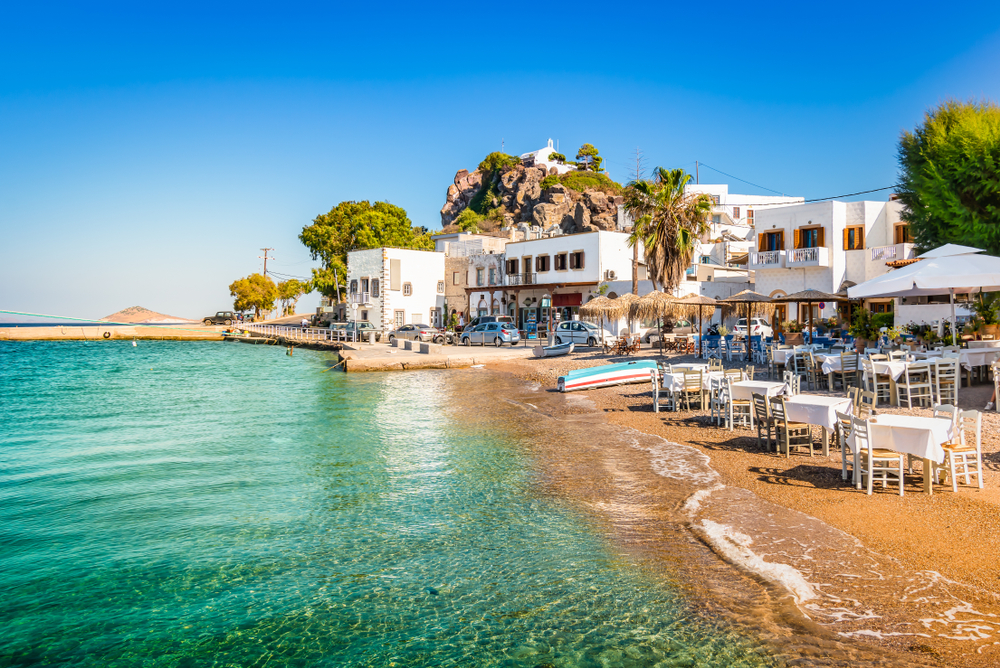
The Dodecanese islands split neatly by two questions: how you plan to arrive, and how much you want to move once you get there. Rhodes and Kos suit a first trip, because each is about an hour’s flight from Athens, and many trips from the US connect there anyway. Symi, Patmos and Halki suit a slower one, because reaching them means a boat.
That difference sounds small. In practice it shapes everything, and it is the reason most people start with a list of twelve islands and end up unable to choose. This guide compares all twelve on the things that actually decide a trip, then says plainly which ones suit which kind of traveler.
What are the Dodecanese islands?
The Dodecanese are a group of Greek islands in the southeastern Aegean, strung along the Turkish coast. Their name means “twelve islands,” though the group holds 15 larger and around 150 smaller ones, of which 26 are inhabited. The Dodecanese islands sit further from Athens than the Cyclades, which is why they feel less crowded and why getting to them takes more thought.
They also look different from the Greece most people picture. Italy governed the islands from 1912 until 1943, and the architecture still shows it. You will see wide public squares, ocher and pink neoclassical facades and Art Deco municipal buildings, not only whitewashed cubes.
The 12 Dodecanese islands, compared
The first column decides most trips: can you fly there, or do you need a boat? Read across each row and you have the whole group on one screen, including the honest downside of every island.
| Island | Can you fly there? | Best if you want… | The trade-off |
|---|---|---|---|
| Rhodes | Yes (international) | A first trip with a walled medieval town and easy flights | Busiest by a distance |
| Kos | Yes (international) | Easy beach days with children, flat roads and short transfers | Large resort hotels in parts |
| Karpathos | Yes (seasonal international, domestic all year) | Long walks between mountain villages, and strong wind | Few boat links; needs a car |
| Kalymnos | Yes (domestic) | A climbing trip on limestone cliffs above working harbors | Limited beaches |
| Leros | Yes (domestic) | A quiet week of Italian-era streets and good food | Little to “see” in a sightseeing sense |
| Astypalaia | Yes (domestic) | One beautiful hilltop town and real isolation | Hard to combine with anything |
| Kasos | Yes (small) | Somewhere with almost no tourism at all | Barely any infrastructure |
| Kastellorizo | Yes (small) | A day of pure quiet in one painted harbor | Far from everything else |
| Patmos | No, boat only | A trip built around one sacred, historic place | Cruise crowds in the middle of the day |
| Symi | No, boat only | A short hop from Rhodes to a neoclassical harbor | Day-trippers arrive daily from Rhodes |
| Tilos | No, boat only | Walking, birdlife and empty beaches | Nothing to do in bad weather |
| Halki | No, boat only | Doing very little, on purpose | One village, and that is the point |
Lists of “the twelve” differ from one source to the next, so two more islands deserve a line. Nisyros is a volcanic island where you can walk down into a crater. Lipsi is a small, quiet island just east of Patmos. Both are reached by boat only.
Can you fly to a Dodecanese island?
You can fly to eight of them. Rhodes and Kos have the main international airports, with flights from Athens all year and direct flights from many European cities for much of the year. Karpathos also takes seasonal flights from Europe in summer. Kalymnos, Leros, Astypalaia, Kasos and Kastellorizo have small airports with domestic flights only.
From the US there are no nonstop flights to any of these islands. You connect, usually in Athens, where the flight on to Rhodes or Kos takes about an hour, or in another European hub that flies to the islands directly in season.
That single fact explains most of the frustration people have planning the Dodecanese islands. Patmos, Symi, Tilos, Halki, Nisyros and Lipsi have no airport at all. They are not remote in any dramatic sense, but they cannot be slotted into a short trip the way an island with a runway can. Our guide to getting around Greece by plane and ferry covers the wider picture.
So the honest planning rule is simple. Have a week or less in the islands? Build the trip around Rhodes or Kos, and treat the sea-only islands as places you go from there. With longer than that, the boat turns into an asset instead of an obstacle, because the slower islands are the better ones. That is the thinking behind our ten day Rhodes itinerary, which ferries you on to Halki, Tilos and Symi and is one of our experiential Greece vacation packages.
The boat is also the part most likely to go wrong, and weather does not care about your booking:
“She [Barbara] immediately contacted us when our ferry was canceled, offered us alternatives, made all the arrangements and then monitored the situation to make sure we arrived safely and with a minimum amount of additional problems. It’s times like these when having a good agent is invaluable.” abulafia, TripAdvisor, May 2026
How quiet is quiet? A number that helps
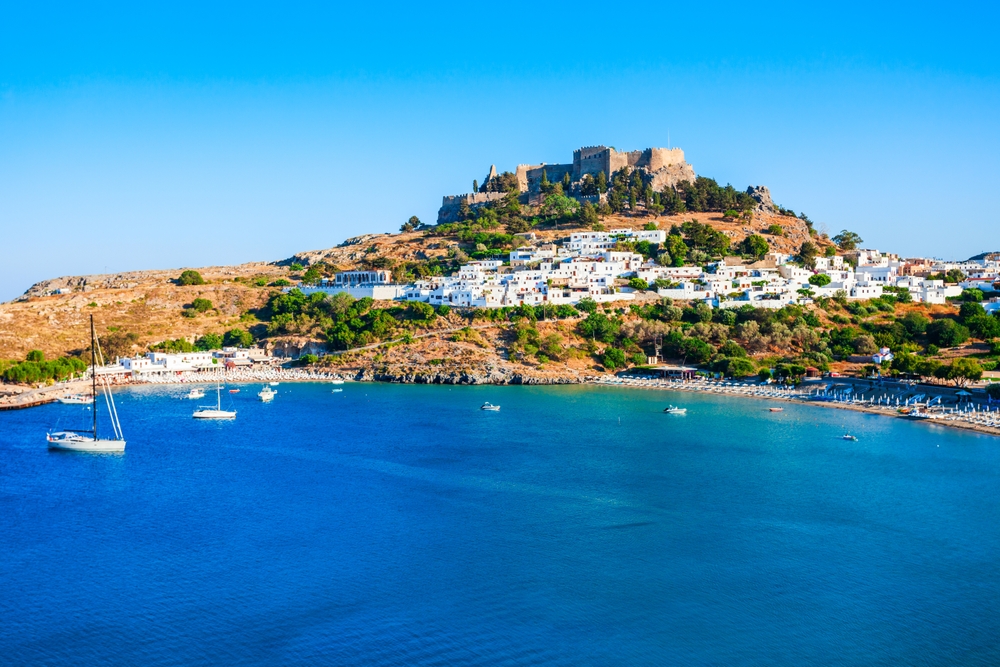
Leave Rhodes and Kos and you share the land with about a fifth as many people. Everyone writing about these islands calls the small ones “unspoiled.” This is what the word is worth in practice.
The Kos regional unit covers about 130 square miles (337.2 km²) and had 38,137 residents at the 2021 Greek census. That is about 290 people per square mile. The Karpathos and Kasos regional unit covers almost exactly the same ground, about 145 square miles (374.3 km²), and had 7,790. That is about 54 per square mile, before a single tourist arrives.
That ratio is the difference between a village where a couple of places stay open in May and one where the whole waterfront does. Neither is better. They are different vacations. Work out which one you are after before you start comparing beaches, because the beaches will not tell you.
Which Dodecanese island suits which traveler
If this is your first time in Greece
Go to Rhodes. The medieval town is walled, lived-in and largely intact, the island is big enough that a week does not exhaust it, and it is about an hour’s flight from Athens. What it costs you is company. Rhodes is the busiest island in the group, and in July and August the old town is shoulder to shoulder by mid-morning.
Go early or go late in the day, stay outside the walls, and Rhodes rewards you. We cover the island in more depth in our guide to Rhodes and the island of the Knights. For options beyond the Dodecanese, see where to go in Greece for the first time.
If you want quiet more than sights
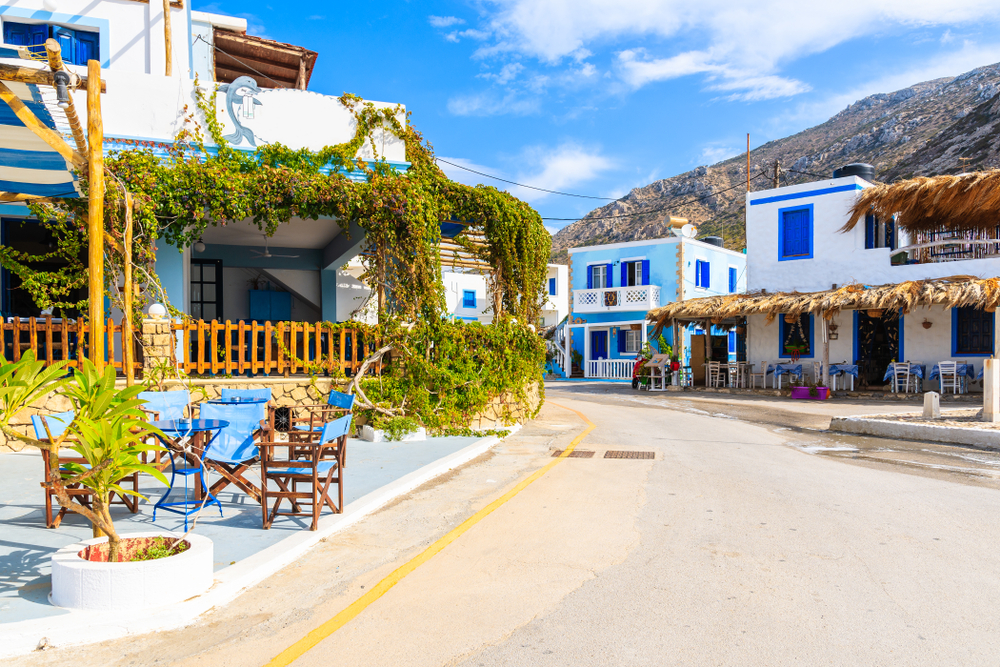
Choose Halki or Tilos. Both are small, both are reached by boat from Rhodes, and neither has a list of attractions to work through. That is the appeal.
On Halki there is one village, Emborio, wrapped around a harbor of pastel houses, and days there are made of swimming, eating and reading. The quickest way in is the small boat from Kamiros Skala on the west coast of Rhodes, about 40 to 45 minutes, which runs from spring to fall. Boats from Rhodes Town take longer, from just over an hour to well over two. Tilos is about 1 hour 10 minutes from Rhodes on the fastest boat, though not every day.
Be honest with yourself about this, though. If you get restless without a plan, these islands will frustrate you by day three. Our guide to quiet Greek islands has more options of the same kind.
If you are traveling with young children
Send the family to Kos. The north coast has long sandy beaches with shallow water, Tigaki and Marmari among them, and Lambi is a short ride from Kos Town. The ground is flat enough for cycling, distances are short and the flight from Athens is about an hour. It also has enough ordinary infrastructure that a difficult day is easy to rescue.
Rhodes works too, though the driving distances are longer and children tire of medieval streets faster than adults do. For islands beyond this group, see our best Greek islands for families.
If you want to walk
Go to Karpathos. It is long, mountainous and windy, with old paths connecting villages that were cut off from each other until recently. Olympos in the north still keeps a distinct dialect and dress, which is the kind of thing that survives when a place is hard to reach.
You will want a car, and you will not want to rush. It has its own airport with flights from Athens, which makes Karpathos easier to reach than its reputation suggests. We have written separately about Karpathos and about the experiences worth building a week around there.
If you climb
Go to Kalymnos. It is a working sponge-fishing island whose limestone cliffs brought climbers, and then more climbers. Plan it as a climbing trip first and a beach trip second. If you do not climb, its beaches are ordinary and you will wonder what the fuss is about.
If you want a trip built around one historic place
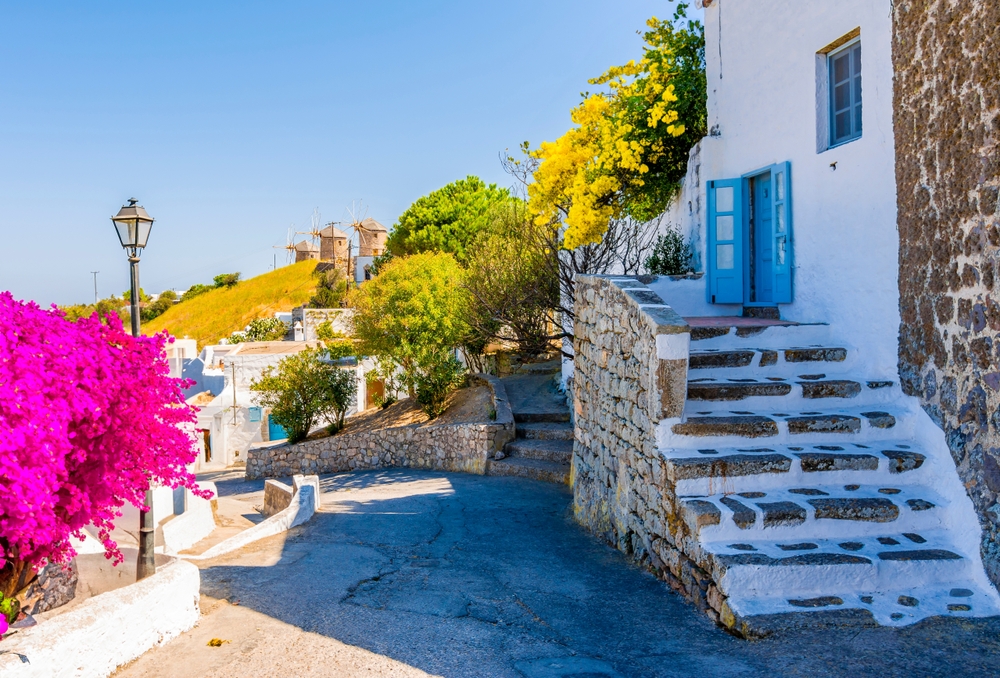
Patmos is the answer. The Monastery of Saint John sits above Chora, and the cave below it is where the Book of Revelation is traditionally said to have been written. That history draws a steady stream of visitors, and the island has grown discreetly elegant around it without turning into a resort.
Patmos suits people who want a place with some weight to it rather than only a beach. Chora is one of the most attractive villages in the Aegean, and the walk up to it at dusk is the best hour on the island. Our guide to Patmos goes into what to do with a few days there.
If you only have a few days for the islands
Most travelers from the US fit the Dodecanese into a wider Greece trip, often after a few days in Athens. With three or four nights, stay on one island, and make it one with an airport. Three nights split between two islands sounds efficient and feels like packing. Rhodes and Kos are the easiest choices, since both have flights from Athens all year.
Symi is the exception worth considering. The fastest boats from Rhodes take about 45 minutes, so arriving by sea costs you an afternoon rather than a day.
If you are going for the photographs
Go to Symi. The harbor at Gialos is a horseshoe of neoclassical mansions in ocher, cream and faded red, rising steeply from the water, and it is worth arriving in daylight for.
The catch is timing. Boats from Rhodes unload day-trippers late morning and collect them again in the late afternoon, so the harbor has a busy middle and a lovely start and end. Stay the night and you get both. Our Symi guide covers costs, crossings and where to stay.
If you want green hills, not bare rock
Look at Rhodes and Karpathos. Inland Rhodes has pine-covered mountains, shaded villages and green valleys, a world away from its beach strips. Karpathos has pine forest on its mountain slopes. Both look nothing like the bleached, treeless image of the Cyclades, and both have airports, so the green comes without a long boat ride.
Which islands work well together in one trip
Two islands in a week is comfortable; three is possible if two of them are close. The Dodecanese islands punish a trip that moves too often, because a vacation spent in transit is not much of a vacation. Here is the shape of trips that work, as examples rather than a formula.
That order is the part guests tend to notice afterwards, more than any single island:
“One thing we especially appreciated was how thoughtfully the trip flowed from one place to the next. It was not just about seeing beautiful locations, but about the overall experience and feeling each destination gave us along the way. The pacing, island order, and balance of everything felt so intentional and special.” Pamela A, TripAdvisor, May 2026
Seven days, first visit. Four nights Rhodes, three nights Symi. One short flight from Athens, one crossing of about 45 minutes, and two places that look nothing like each other. This is the trip we plan most often for people new to the region.
Ten days, slower. Three nights Rhodes, three nights Tilos, four nights Halki. The pace drops with each move, which is the right direction of travel. You end the trip doing almost nothing.
Ten days, walking. Karpathos alone, with a car and a couple of base changes between the south and Olympos in the north. Splitting this across two islands wastes the walking days on boats.
Two weeks, no plan. Kalymnos, Leros, Lipsi and Patmos sit close together in the north of the group, so the distances between them are short. This is the one corner of the Dodecanese where moving frequently does not cost you much.
Want Rhodes or Kos as part of a longer journey? Our packages Legends and Empires: Rome, Athens and Rhodes and From Canals to Islands: Venice, Milan, Kos and Rhodes do exactly that. If you would rather have the shape of the trip worked out for you, that is what we do: see our tailor-made Greece packages.
Can you combine the Dodecanese with Turkey?
Yes. Two short crossings make it easy. Kos to Bodrum takes about 30 minutes and runs year-round. Rhodes to Marmaris takes about an hour, with daily boats in summer and a few a week in winter.
Remember that this is an international border, not an island hop. You show your passport at both ends and buy a separate ticket. Check Turkey’s current entry rules for US passport holders before you book, and allow time to go back through EU border control when you return to Greece. A day across the water works well; it is worth keeping your nights on the Greek side if your flights home leave from Rhodes or Kos.
Which Dodecanese islands to leave off your list
Nobody writes this part, so here it is. Some Dodecanese islands are the wrong answer to some trips. None of them is bad. Knowing which one is wrong for you saves a wasted week.
Leave out Kasos and Kastellorizo if you have under ten days. Both are wonderful and both are awkward. Kastellorizo sits far east of the rest of the group, closer to Turkey than to Rhodes. Kasos has almost no visitor infrastructure. They are rewarding second or third visits, not first ones.
Leave out Astypalaia if you want to island-hop. It is beautiful and its hilltop town is one of the finest in the Aegean, but it sits apart from the others. Going there works as a single destination and fights you as part of a chain.
Leave out Rhodes town in August if you came for quiet. Not the island, the old town. Base yourself elsewhere on Rhodes and visit early.
Leave out Kalymnos if you do not climb. Its beaches are the weakest case in the group. Choose it for the cliffs or choose somewhere else.
We apply the same thinking to the whole country in Greek islands to avoid, and where to go instead.
Dodecanese or Cyclades?
Choose the Cyclades for a short trip with several islands in it, and the Dodecanese for a longer one with fewer. Most people weighing these up are privately comparing them with Santorini and Mykonos, so the two groups are worth putting side by side.
| Dodecanese | Cyclades | |
|---|---|---|
| Getting there | Two main international airports, both about an hour from Athens | More airports, more ferries |
| Look | Italian squares, ocher facades, pine and green | Whitewash, blue domes, bare rock |
| Crowds | Concentrated on Rhodes and Kos | Spread across many islands |
| Island-hopping | Slower, fewer links | Faster, more frequent |
| Suits | A longer, calmer trip | A shorter, busier one |
The short version: the Cyclades are easier to move around and harder to escape. The Dodecanese islands ask for more traveling time and give back more space when you get there.
There is one practical consequence. If you have five days and want three islands, the Cyclades will serve you better, and there is no shame in saying so. If you have ten days and want two islands you will remember, come here.
When to go
May, June, September and early October are the best months in the Dodecanese islands, and September is the strongest of the four. The sea has had all summer to warm up, the crowds have thinned, and the meltemi, the strong summer wind that blows from about mid-May to mid-September, has usually passed by late September.
Winter in the Dodecanese islands is a real answer for some people and a bad one for most. The small islands largely close, and boats run less often. Rhodes and Kos stay open and are pleasant to walk around, but you are visiting a town rather than taking a beach vacation.
Because the Dodecanese islands need more travel time than the Cyclades, the shoulder months matter more here than they do elsewhere in Greece. If you are weighing up quieter corners of the country more broadly, we have written about under-the-radar Greek destinations for spring. We have also covered where to go at short notice around August 15, the week when much of Greece is on the move at once.
Choosing your island
Pick the trip first, and the island follows almost on its own. A first visit, a quiet week, a hiking trip, a set of photographs: each one points to a different corner of the Dodecanese islands.
If you are still holding a list of twelve, use the first table on this page and cut it to three. Then ask whether you can fly to any of them, because that answer usually chooses for you.
And if you would rather hand the whole question over, we plan tailor-made Greece packages, including the islands most people never reach.
Frequently asked questions
What is the largest Dodecanese island?
Rhodes is the largest, both in land area and in population, and it has been the dominant island of the group since antiquity. It is also the main entry point, with flights from Athens all year and from many European cities in season.
What does the name Dodecanese mean?
Dodecanese means “twelve islands” in Greek. The count is not literal. The group holds fifteen larger islands and around 150 smaller ones, and 26 of those are inhabited. So in practice you are choosing from more than twelve, which is why picking one takes a little work.
Which country owns the Dodecanese islands?
Greece. The islands joined Greece under the 1947 peace treaty with Italy. Before that came more than three decades of Italian rule and a short spell of British military administration after World War II.
Why did Italy rule the Dodecanese?
Italy took the islands from the Ottoman Empire in 1912, during the Italo-Turkish War, and governed them until its surrender in September 1943. Germany then held the Dodecanese until the garrison commander surrendered them to the British on Rhodes on May 8, 1945. The islands stayed under British military administration until the 1947 peace treaty with Italy united them with Greece.
So the Italian period lasted about thirty-one years, not the thirty-five the end dates suggest. That is still long enough to explain the wide squares and neoclassical public buildings you see today.
How do you get from Rhodes to Symi?
By boat from the main port in Rhodes Town. The fastest boats take about 45 minutes, and slower ferries take from about an hour to an hour and 40 minutes. There is no airport on Symi, so every trip runs through Rhodes.
What are the Dodecanese islands known for?
Three things above all: the medieval city of Rhodes, the monastery of Saint John on Patmos, and Italian-era architecture that sets the group apart from the rest of Greece. The islands are also known for being greener and less bleached than the Cyclades.
Do you need to rent a car?
On Halki, Symi, Tilos and Kastellorizo, no, and a car there is more nuisance than help: distances are short and parking is scarce. On Karpathos, yes, if you want to see more than one end of the island. Rhodes and Kos sit in between, since buses run between the main towns and the beaches.
Is one week long enough for the Dodecanese?
One week is enough for two islands at a comfortable pace, and that is a good trip. It is not enough to see the group, and trying to will leave you remembering ports rather than places. Ten days is where the region starts to open up.
Feeling Ready?
From our blog
Aliki Beach, Paros: Three Beaches, One Name
READ MORE
Ioannina, Greece: The Lake City Between Athens and Corfu
READ MORE
Kalamata, Greece: How to Get There, What to See, When to Go
READ MORE
Logaras Beach, Paros: Where to Swim When the Sun Bites
READ MORE
Athens to Santorini: Ferry or Flight? (2027 Guide)
READ MORE
Athens to Santorini: Ferry or Flight? (2027 Guide)
READ MORE
Piso Livadi Beach, Paros: Sand, Tavernas and the Boat Out
READ MORE
Aegina, Greece: A Practical Island Guide (2026)
READ MORE
Spetses, Greece: Everything you need to know (2026)
READ MORE