Kalamata, Greece: How to Get There, What to See, When to Go
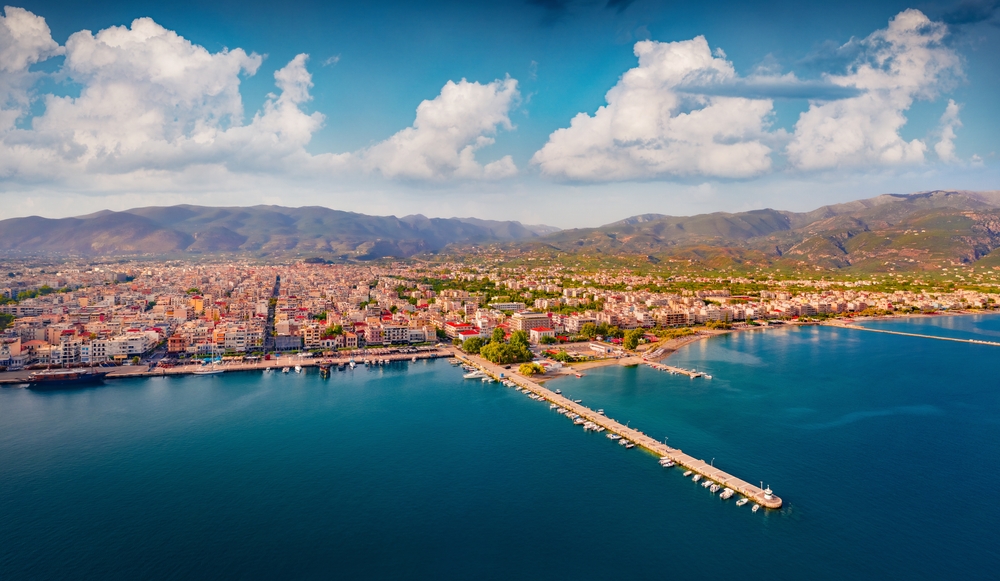
Kalamata, Greece is a working city of just under 59,000 people on the Messinian Gulf, not on the Ionian Sea as several guides have it, 239 kilometers southwest of Athens. Behind it stand the Taygetos mountains. The drive from the Acropolis takes two hours forty, and the bus costs €26.60. Most people know the name from a jar of olives and have no idea it is a place you can go.
This guide covers how you get there, what the museums and sites charge, which day trips are worth the drive, and which month to come.
Is Kalamata worth visiting?
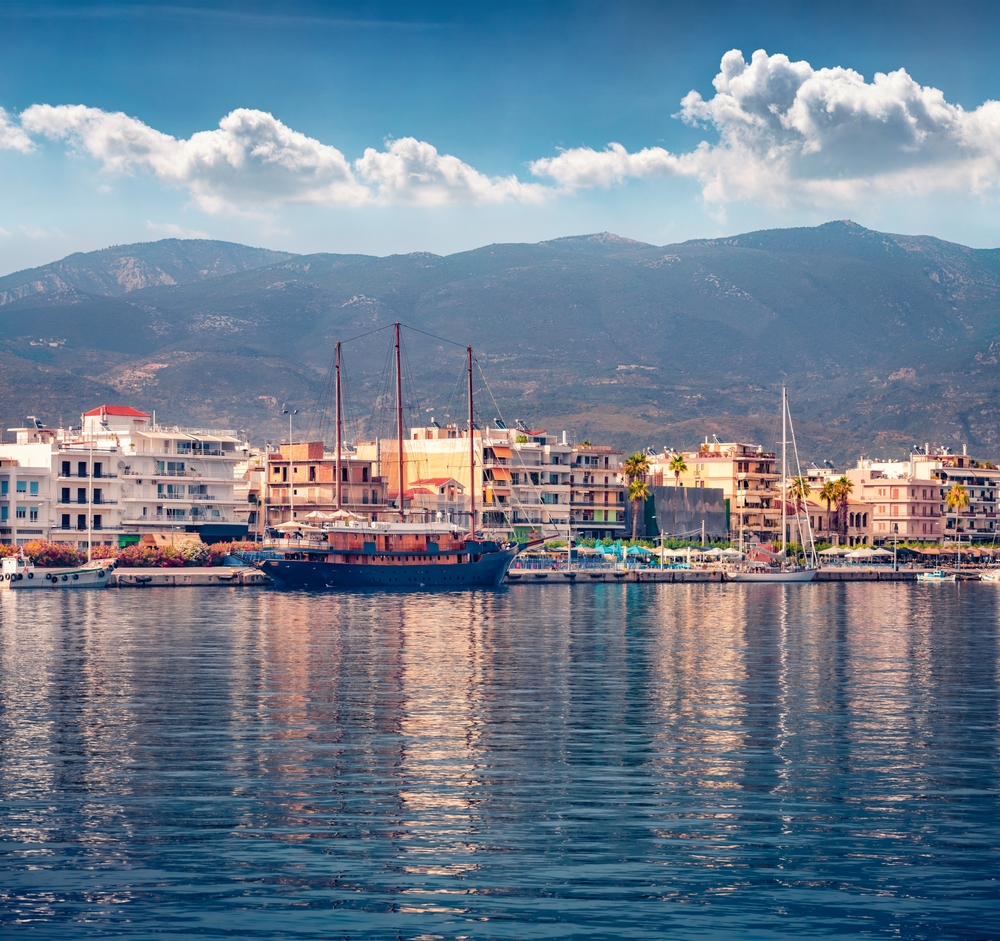
Yes, as a base rather than as a destination in itself. Within an hour’s drive you have Ancient Messene, one of the most completely preserved classical cities in Greece. You also have the beaches of the Mani, Voidokilia, the Venetian castles at Methoni and Koroni, and Mystras. Kalamata, Greece gives you a real waterfront, a proper market and dinner at mainland prices.
You will also notice, once you start reading about the place, that half the results are about buying property rather than visiting. That is real. Kalamata, Greece has become the Peloponnese town foreign buyers talk about, because it has an airport, a year round population and prices well below the coastal cities of western Europe. We sell trips rather than houses, so treat that as context for why the town feels unusually alive for its size, and nothing more.
The old town is small and you will walk it in a morning. An earthquake on 13 September 1986 killed twenty people and injured 330, and much of what you see was rebuilt afterwards in concrete. If you want a place to sit still and look at whitewashed walls for a week, this is not it.
Come to Kalamata, Greece if you are driving the Peloponnese and want somewhere to sleep that has a life of its own. Our guide to the Peloponnese in autumn covers the wider region if you are still deciding which corner to base yourself in. It also belongs on the same list as Aegina, Spetses and Paxos. We have written all three up the same way.
How to get to Kalamata
By bus
The KTEL Messinias coach runs from Athens ten times a day. The first leaves at 06:15 and the last at 21:30. The operator’s own fare page puts the one way ticket at €26.60. That price was set by ministerial decision 37279/2026 and took effect on 6 March 2026. Departures leave from Terminal A on Kifissou Avenue. The journey runs between two and three quarter hours and three and a quarter, depending on whether your service stops at the Isthmus and Tripoli.
By car
The drive itself is 239 kilometers and about two hours forty, out on the Olympia Odos and then the Moreas motorway. Tolls come to €16.35 each way across seven stations, from €2.50 at Elefsina to €2.25 at Kalamata itself. There is a toll free alternative that saves about €4.50 and costs you twenty two minutes.
A car changes the trip completely here, because everything worth doing is thirty to sixty kilometers away. If you are coming for more than two nights, take one.
By air
Kalamata International Airport sits about ten kilometers west of the city, near Messini. A bus gets you into town in twenty to twenty five minutes. Most of its international routes are summer seasonal, and the domestic service from Athens is seasonal too. We could not verify a year round route list from a primary source, so we are not printing one. Check the carrier’s own schedule for the month you are travelling rather than assuming a winter flight exists.
Can you take the train?
No. There is no scheduled passenger train to Kalamata, Greece, and there has not been one since services stopped in 2010.
Something is stirring, though. A festive train ran from Asprochoma into Kalamata on 31 December 2025. It was the first train to reach the city in eleven years. The government is now studying a pilot revival of the metre gauge Peloponnese network, and Kalamata to Messini to Diavolitsi is one of the two candidate routes. As of this writing no approval has been issued. Plan on the bus or the car.
What the museums and sites cost
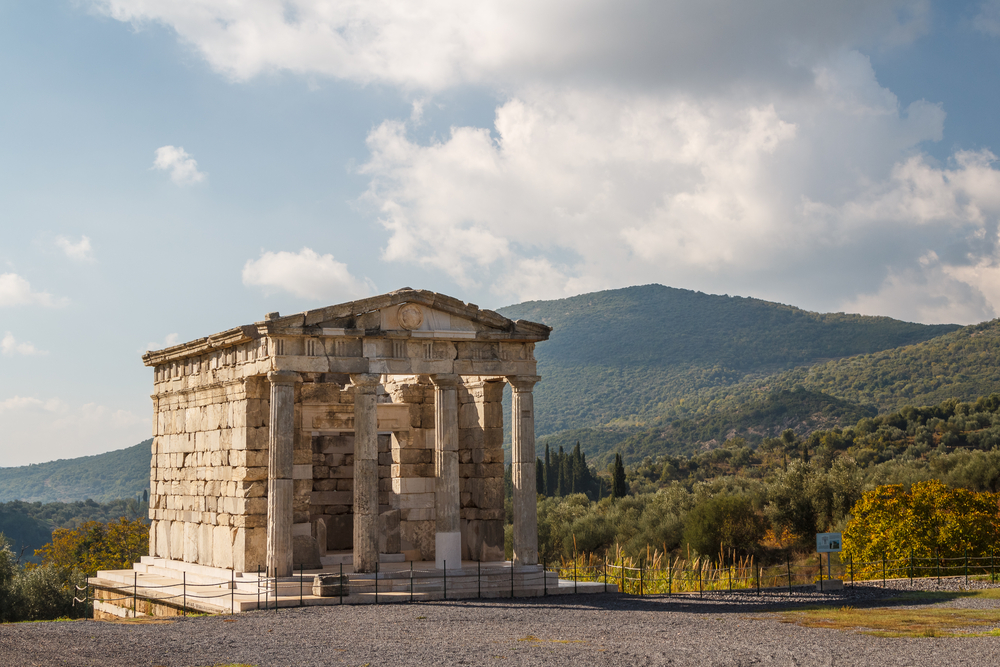
Almost nobody publishes what Kalamata’s museums and sites charge, so here they are.
Tickets and opening hours
| Place | Ticket | Opening hours |
|---|---|---|
| Archaeological Museum of Messinia, Kalamata | €10 | 08:30 to 15:30 winter, closed Tuesdays; 08:00 to 20:00 summer, Tuesdays from 12:30 |
| Historical and Folklore Museum, Kalamata | Not published | 09:00 to 13:00 Tuesday to Saturday, 10:00 to 13:00 Sunday, closed Monday |
| Ancient Messene, archaeological site | €15 (€8 reduced) | 08:30 to 15:30 winter, closed Tuesdays; 08:00 to 20:00 summer |
| Archaeological Museum of Ancient Messene | €5 | Same hours as the site |
The Ministry of Culture’s museum register is the source for the Kalamata museums, and it is the authority on its own opening hours, which change between winter and summer and catch people out on Tuesdays.
Food and beds
Hotels and restaurants are the part we will not put a number on. No Messinian hotel body publishes euro rates we could verify. The cost aggregators that do publish figures work in pounds and dollars, and they disagree with one another. What we can say is that the fixed costs of a day here are small. The museum is €10, Ancient Messene and its museum together €20, and the coach that brought you €26.60. Everything else is priced like a mainland provincial city rather than like an island in August, which is most of the reason to come. Check live room rates for your dates rather than trusting any daily average, ours included.
The old town, the castle and 23 March 1821
The Kastro sits above the old town, and the old town is the part of Kalamata, Greece that survived. Below it, the streets around Ypapanti cathedral and the central market are where the city still does its shopping.
However, the reason this city matters to Greeks is a single morning.
On 23 March 1821, the Ottoman garrison of Kalamata surrendered without a fight. Roughly 3,000 Greek fighters had arrived against an Ottoman guard of about 150. Some 2,000 of them came with Theodoros Kolokotronis, alongside Petrobey Mavromichalis, Papaflessas and Nikitaras. The commander, Suleiman Aga Arnaoutoglou, handed over the town and its weapons. At noon, twenty four priests held a doxology at the Byzantine Church of the Holy Apostles. It still stands in the old town. That same day the fighters formed the Messenian Senate, which was the first governing body of the revolution.
One correction while we are here. A widely shared travel blog says the mass ended 360 years of Ottoman rule. The arithmetic does not work. The Ottomans took the town in 1481, which makes 340 years, and the Venetians held it from 1685 to 1715 in the middle of that. Kalamata was first, which is claim enough without rounding it up.
Things to do in Kalamata itself
The city list is short, and it is worth being honest about that.
Start with the Archaeological Museum of Messinia, the one indoor hour that pays for itself at €10. It holds the finds from Ancient Messene and from the Mycenaean sites around it. Next comes the central market, which is the best cheap lunch in town and the place to buy oil. Above both, the Kastro is a twenty minute climb, worth it for the view over the gulf rather than for the ruin at the top. Ten minutes will do for the Church of the Holy Apostles, which carries more history per square metre than anything else here.
Then there is the Navarinou waterfront, which is where Kalamata actually spends its evenings. Walking it end to end after eight, with half the city doing the same thing, is the most Kalamatan thing you can do.
Everything else on the list is a drive, which is the next section.
The olives, and what the name means
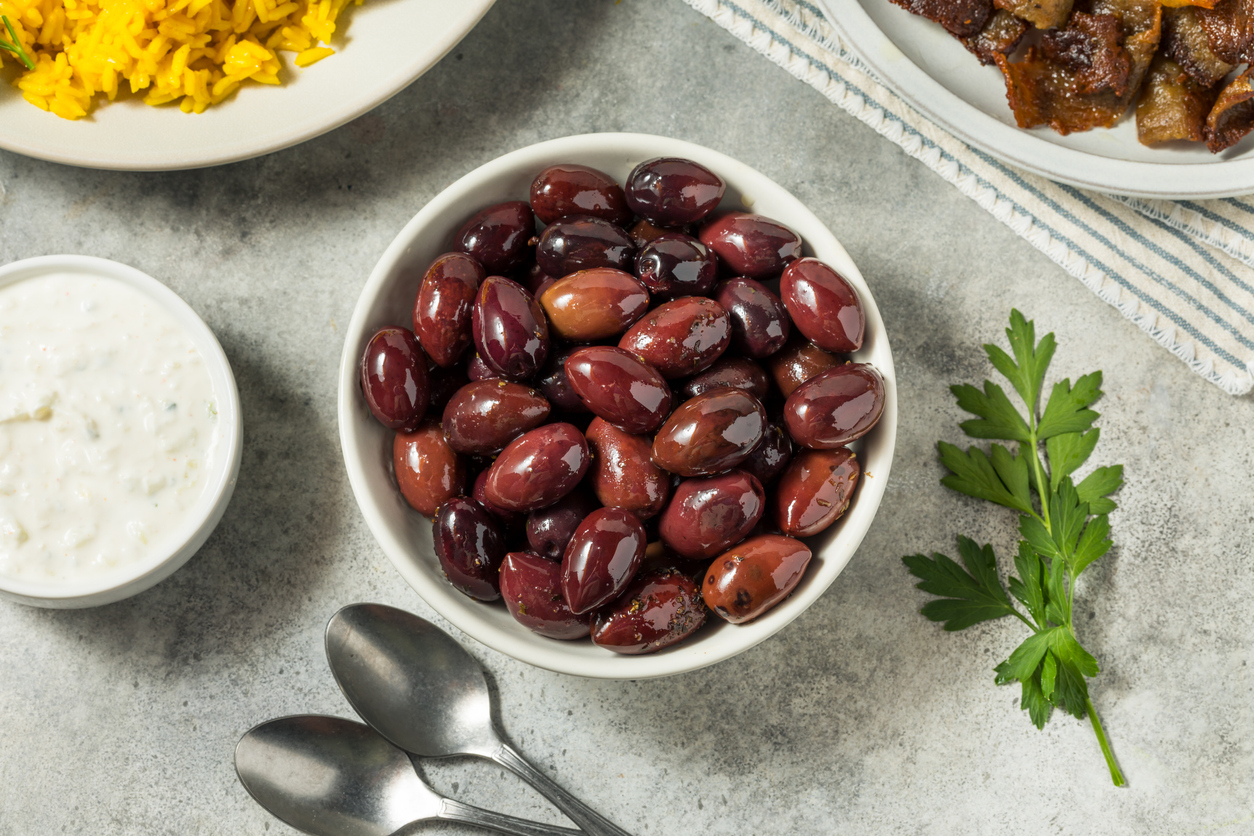
Everybody who writes about Kalamata, Greece mentions the olives. Almost nobody explains what the word on the label is doing.
There are two separate European protected designations, and they are not the same thing. The table olive is Ελιά Καλαμάτας, registered as a PDO by Commission Regulation (EC) 1107/96 of 12 June 1996. The oil is Καλαμάτα, registered separately by Regulation (EC) 1065/97 of 12 June 1997. It has to be made from Koroneiki and Mastoeidis olives grown in Messinia, with acidity no higher than 0.50 grams per 100 grams.
The name is tied to the region. So the same cultivar grown anywhere else in the European Union has to be sold as Kalamon, not Kalamata. Next time you are in a supermarket, look at the label. That one word tells you whether the olive came from here.
So buy both at the central market rather than at the airport. The same oil costs several times more once it has been repackaged for a departure lounge.
Beaches in and near Kalamata
The city beach runs along Navarinou, the waterfront road. It is organised, with sun loungers, beach bars and open stretches between them, and it has held Blue Flag status. Sources disagree wildly about how long it is, from “hundreds of metres” to “several kilometres”. We are not going to print a number we cannot stand behind, so walk it and judge for yourself.
The sea stays warm later than you think. It reaches about 24°C in July, peaks around 25°C in August, and is still about 22°C in October.
For the good stuff you drive. Kardamyli is 35 kilometers south, about forty five minutes. Stoupa sits just beyond it. Both are on the Messinian Mani coast, where the mountains come down into the water. Voidokilia is the perfect horseshoe of white sand near Pylos, about fifty to fifty five kilometers away and roughly an hour. A protected lagoon sits behind the dunes. There are no facilities to speak of, so bring water. Our round up of the best mainland beaches in Greece puts these in context against the rest of the country.
Day trips from Kalamata
Nine of the places below sit inside two hours of the waterfront, and seven of them inside one. That is the arithmetic that turns one night in Kalamata into three.
| Day trip | Distance | Drive |
|---|---|---|
| Ancient Messene | 30 to 32 km | 45 min |
| Kardamyli, Messinian Mani | 35 km | about 45 min |
| Polylimnio waterfalls | 40 km | 50 min |
| Voidokilia beach | about 50 to 55 km | 1 hr |
| Pylos | 54 km | 1 hr 10 |
| Mystras | 54 km | 52 min |
| Sparta | 57 km | 54 min |
| Methoni castle | 60 km | 1 hr 15 |
| Areopoli, deep Mani | 79 km | 1 hr 48 |
Ancient Messene is the one to do first. It is a whole classical city, founded in 369 BC. The theatre, the stadium, the council house and the fortification walls are all still standing. On a weekday you will often share it with a dozen other people. The site is €15, or €8 reduced, and its separate museum another €5. That figure is what the national tourism board publishes rather than what the ticketing authority sets, so ring ahead before you build a day around it.
Mani, Mystras and the castles
The Mani is the other direction entirely, a peninsula of stone tower houses and coastline that feels like a different country. We have written about the most picturesque towns and villages in the Mani if you want to pick where to stop.
Meanwhile Mystras, the Byzantine city on the slope below Taygetos, is fifty two minutes away on the other side of the mountain. It is one of the great sites in Greece. Our piece on Mystras and the Byzantine renaissance explains what you are looking at.
Methoni and Koroni are the Venetian castles on the southwest tip. Both sit inside our wider guide to the castles and fortresses of the Peloponnese.
Finally, Polylimnio is a chain of small waterfalls and green pools in the hills, fifty minutes out. Reaching them is a walk rather than a drive. Our list of walking trails in the Peloponnese covers it alongside the longer routes.
Kalamata or Nafplio?
People planning a first Peloponnese trip usually end up choosing between these two, so here is the short answer.
Nafplio is prettier. It is a Venetian harbour town with a fortress on a rock, and it puts you within half an hour of Mycenae, Epidaurus and Argos. If your trip is about classical Greece and you have five days, base yourself there.
Kalamata, Greece is plainer and better placed for the southwest. From here the Mani, Messene, Voidokilia, Methoni and Mystras are all inside two hours. Every one of them is a long day from Nafplio and a short one from Kalamata, Greece. It is also cheaper, and it has a market and a university crowd rather than a seafront of souvenir shops.
The best version of the Peloponnese uses both. Drive down through Nafplio, cross to Kalamata, and come back along the other coast.
What to eat
Messinian cooking is mountain and sea at once, and the two things it does better than anywhere are olive oil and pork.
So start with gourounopoula, slow roasted suckling pig, which is a Messinian speciality rather than a tourist dish. Lalangia are the local fried dough strips, eaten at breakfast or with a drink. Diples are the festival pastry, thin dough rolled and fried and drenched in honey.
Alongside them you get syglino, smoked and cured pork preserved in fat, which turns up in omelettes and in pies across Messinia and the Mani. Local figs and the honey from the Taygetos slopes are worth carrying home.
The central market in Kalamata, Greece is where all of this is actually sold. It is a working market rather than a food hall, and it is busiest in the morning.
The stalls are also where you find the syglino and the honey, and where the prices are set for locals rather than for visitors.
Getting around Kalamata
In Kalamata, Greece itself you walk. The waterfront, the old town, the market and the museums sit within about twenty five minutes of each other on foot. The old streets are too narrow to enjoy in a car anyway.
For anything beyond that you need wheels. Local buses and taxis exist. However, the timetables suit residents going to work rather than visitors heading to a beach at eleven. Most people hire a car for the days they leave the city. Car hire in Kalamata, Greece is cheap out of season and worth booking ahead in August.
Be warned that parking along the waterfront fills up from early evening in summer. Park back a street and walk down.
When to visit Kalamata
May, June, September and October. Those are the four months to book Kalamata, Greece. October is the quiet answer nobody gives you, because the sea is still around 22°C while the crowds have gone.
Summer is hot here, hotter than on the islands. The mountains hold the heat in and there is no meltemi to move it. July and August are also close to rainless, which is why the countryside is brown by then.
Winter is wet rather than cold, with almost all of the year’s rain falling between November and February. We could not reach the Greek met service for figures we would stand behind. Treat that as the shape of the year rather than as millimetres. The upside is an empty Ancient Messene and rooms at winter prices.
Spring, meanwhile, brings the wildflowers and full waterfalls at Polylimnio, and by May the sea is swimmable at about 18°C if you are brave. Our round up of the best villages in Greece puts the Messinian and Mani villages alongside the mainland alternatives, which helps if you are building a spring route.
Where to stay
In Kalamata, Greece, stay on or just behind the waterfront at Navarinou if you want to swim before breakfast and eat outside at night. Stay up near the old town and the market if you would rather be in the working city and walk down to the sea.
The third option is not to sleep in the city at all. Kardamyli is about forty five minutes south and Stoupa a little beyond it, and both are considerably prettier. Plenty of people base themselves there instead. They treat Kalamata, Greece as the place they drive to for the airport, the museum and the market.
If you are touring the Peloponnese properly, Nafplio makes the natural second base at the other end of the region, and Monemvasia the third.
Frequently asked questions
How many days do you need in Kalamata?
One day covers the old town, the castle, the market and the museum. Three gives you Ancient Messene, a Mani day and a beach day, which is the version most people wish they had booked.
Can you swim in Kalamata?
Yes, off the city beach along Navarinou, which is organised and has held Blue Flag status. The sea runs about 24°C in July and 25°C in August. It is still around 22°C in October, so the swimming season outlasts the hotel season.
Do you need a car in Kalamata?
Not inside the city. The waterfront, the old town, the market and the museums all sit within about twenty five minutes of each other on foot. For everything in the day trip table you do need one, because the local buses run on commuter timetables.
Is Kalamata expensive?
No. The fixed costs are small. The coach from Athens is €26.60, the Archaeological Museum of Messinia €10, and Ancient Messene €15 plus €5 for its museum. Rooms and meals are priced like a mainland provincial city rather than like an island in August.
What is Kalamata famous for?
Three things. The olives and the olive oil, which carry two separate European protected designations tied to this region. The liberation of the town on 23 March 1821, which started the Greek War of Independence. And its position as the gateway to Messinia, Ancient Messene and the Mani.
Kalamata or Nafplio, which is the better base?
Nafplio for the northeast, because Mycenae, Epidaurus and Argos are all within half an hour of it. Kalamata, Greece for the southwest. Ancient Messene, the Mani, Voidokilia, Methoni and Mystras are all within two hours of it, and none of them are a comfortable day from Nafplio.
[IMAGE PLACEHOLDER: IMAGE-7-map.jpg / alt: “Map of Kalamata, Greece and the day trips within an hour’s drive”]
Should you go?
Kalamata is the city most people drive past on the way to a beach. It is a better place to sleep than the beach is. You get a working market, and dinner at mainland rather than island prices. Forty five minutes up the road stands one of the most completely preserved classical cities in Greece. And the name on the jar in your kitchen cupboard turns out to be a real place, with a real mountain behind it.
If you would rather have the route built than build it, that is what we do. Our Greece Vacation Packages are put together one trip at a time. One of them already comes into this corner of the Peloponnese. Greece Family Trip: Athens and Western Greece runs Athens, Delphi, Zakynthos, Ancient Olympia and Pylos. There is beekeeping, and a day of kayaking and hiking at the Polylimnio waterfalls, before it finishes at Nafplio and Mycenae. Polylimnio is one of the day trips in the table above, so that leg already puts you an hour from Kalamata. Ask us about Kalamata, Greece and Ancient Messene when you enquire.
Feeling Ready?
From our blog
Kalamata, Greece: How to Get There, What to See, When to Go
READ MORE
Logaras Beach, Paros: Where to Swim When the Sun Bites
READ MORE
Athens to Santorini: Ferry or Flight? (2027 Guide)
READ MORE
Athens to Santorini: Ferry or Flight? (2027 Guide)
READ MORE
Piso Livadi Beach, Paros: Sand, Tavernas and the Boat Out
READ MORE
Aegina, Greece: A Practical Island Guide (2026)
READ MORE
Spetses, Greece: Everything you need to know (2026)
READ MORE
Paxos, Greece: How to Get There, What It Costs, Where to Stay
READ MORE
Symi, Greece: What It Costs, How to Get There, Who It Suits
READ MORE