Athens to Santorini: Ferry or Flight? (2027 Guide)
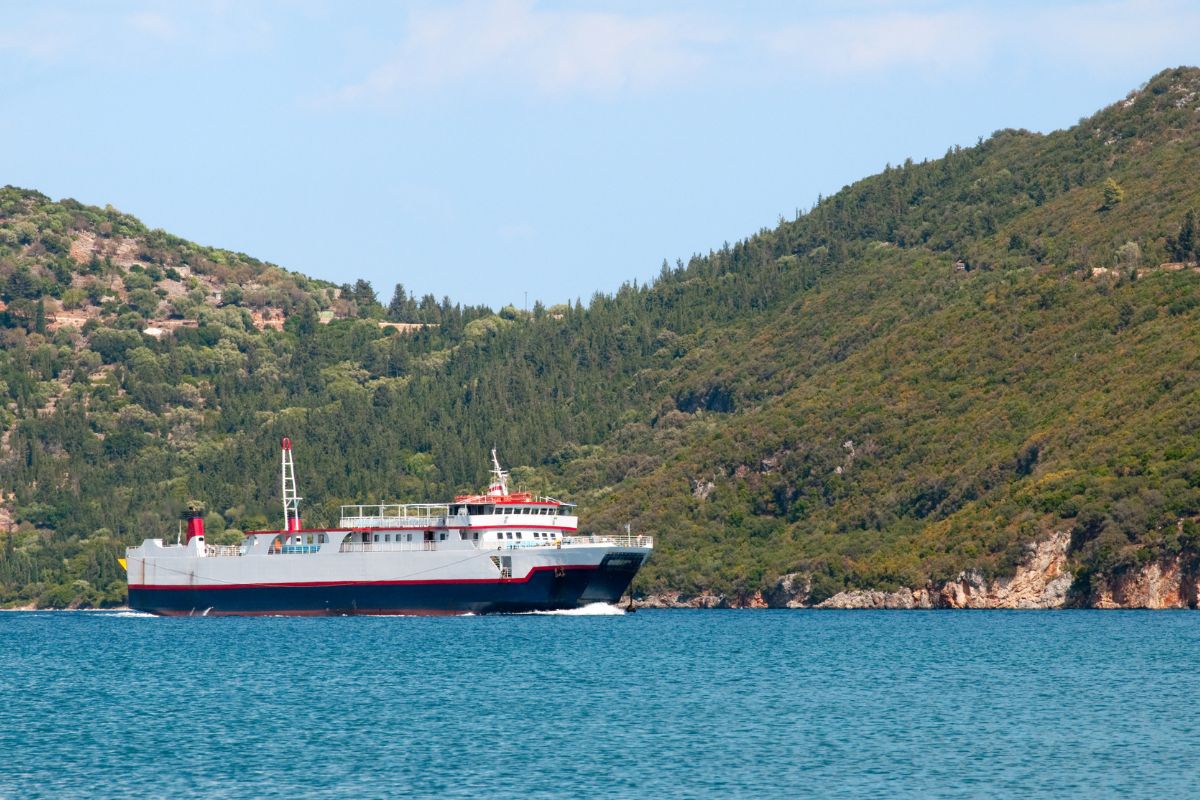
Flying from Athens to Santorini takes about 45 minutes and the ferry takes five to ten hours, so most people book the plane without thinking twice. That is the right call on a short trip in winter. It is the wrong one if you are carrying three suitcases in August, and this guide sets out where the line falls.
Below are real crossing times with their sources, both Athens ports compared, and what the wind does to the schedule in summer. The last section covers the one booking mistake that costs travellers a full day.
Athens to Santorini by ferry or flight: the short answer
Fly if you are short on days, if you are travelling between November and March, or if you have a connecting flight home within a day of getting back to Athens. Fly too if anyone in your group gets seasick. The Aegean is not always flat, and five hours in a sealed catamaran cabin is a long time to regret your choice.
Take the flight if:
- You have seven days or fewer in Greece. Nine hours at sea is a seventh of your week.
- You are travelling in winter, when ferry schedules thin out and cancellations rise.
- You are landing at Athens airport and moving on the same day.
Three situations make the ferry worth its extra hours. Start with the arrival: nothing beats sailing into the caldera with the cliffs going up on both sides. Luggage is the second. A ferry takes four suitcases, or a car, without weighing anything or charging you for it. Island-hopping is the third. If Santorini is one stop among several, with Paros, Naxos, Ios or Milos on the same trip, the ferry network makes that easy in a way flying does not. Our guide to island hopping in Greece covers how to chain those legs together.
One thing surprises people: the ferry is not automatically cheaper. A high-speed ticket in August can cost more than a Ryanair seat booked in March.
Athens to Santorini: how long it takes and what it costs
These figures were checked on 9 September 2026. Ferry times shift with the vessel and the season, and fares move constantly, so read the table as a shape rather than a quote.
| Route | Time | Price from | Source |
|---|---|---|---|
| Flight, Athens (ATH) to Thira (JTR) | about 45 minutes | €50 with Aegean | Aegean |
| High-speed ferry, Piraeus | about 5 hours (Seajets) | €46.50 economy | Ferryhopper |
| Conventional ferry, Piraeus | 6 hours 10 minutes (Blue Star) | €46.50 economy | Ferryhopper |
| Slow ferry, Piraeus | 9 hours 50 minutes to 10 hours 30 minutes (Fast Ferries) | €46.50 economy | Ferryhopper |
| High-speed ferry, Rafina | a little over 5 hours (Golden Star) | €82 | Ferryhopper |
A warning about crossing times you will read elsewhere. Greeka lists the Blue Star crossing at 7 hours 45 minutes; Ferryhopper, which sells the tickets, lists 6 hours 10 minutes. Both are probably right for different sailings. The same company runs different vessels on different days, and some of them call at Paros and Naxos on the way. Check the departure you are booking, not the route average.
Which month changes the answer
Season matters more here than on almost any other Greek route, because the ferry timetable is not the same document in February that it is in August.
From June to September the Piraeus route runs up to eight crossings a day, so you can pick your departure time instead of taking what is left. Fares sit at their highest then, the Meltemi is at its strongest, and flights fill early. In April, May and October, crossings thin out but still run daily, prices soften and the wind is usually kinder.
Between November and March the route keeps operating, January to December, at much lower frequency. A cancelled sailing in winter can mean waiting a day for the next one rather than a few hours. The same seasonal pattern shapes every Aegean route, which we set out in how to travel around Greece.
Taking the ferry from Athens to Santorini
Piraeus or Rafina?
Piraeus is the default choice for most travellers. It sits 15 kilometres south of central Athens, it has the most departures, and the first boat of the day leaves at 07:00.
Rafina is 33 kilometres east of the centre, runs fewer sailings to Santorini, and its first departure is 07:15. The reason to pick it is geography. Rafina sits far closer to Athens airport than Piraeus, which can save you an hour of driving across the city if you fly in and sail out the same day. The reason not to is money: Golden Star tickets from Rafina start around €82, well above the €46.50 entry fare from Piraeus.
Conventional or high-speed?
High-speed catamarans do the crossing in around five hours and conventional ferries take six to ten. The catamarans cost more, and they are the first boats stopped when the wind gets up, because a light hull in a heavy sea is a different problem from a heavy one.
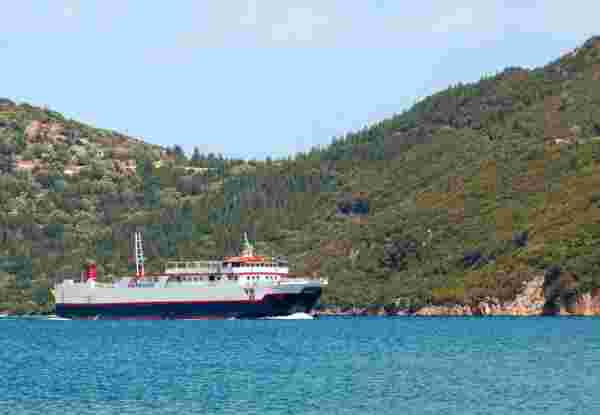
Conventional ferries have open decks, which matters more than it sounds. On a high-speed vessel you sit in a sealed cabin for five hours, closer to a flight than a voyage, and anyone prone to seasickness tends to feel it more rather than less. On a Blue Star you can stand at the rail with a coffee and watch Serifos go past.
Named vessels on this route include the Worldchampion Jet and Seajet 2 with Seajets, the Santorini Palace with Minoan Lines, and Thunder with Fast Ferries. For how the fleet works across the rest of the country, see our overview of Greek ferries. If the water is the point of the trip, the caldera on foot and a catamaran around the island give you the same view from sea level.
Getting from Athens airport to the ferry port
The airport sits on the far side of Athens from Piraeus, and this leg is where people lose their crossing.
Metro trains connect the two without a change, which is cheap and reliable, though it is a long ride. Once you arrive, the walk to your gate adds more time again. Piraeus is not one dock. It is a working port with gates spread over kilometres, and a taxi is faster. Split between three or four people, it is not much more expensive either.
Two habits save the day. Leave at least three hours between your flight landing and your ferry leaving, and find your gate number on the ticket before you set off. Nobody at Piraeus will come and tell you that you are standing at the wrong one.
Luggage, seats and what the crossing is like
Greek ferries do not weigh your bags. There is no excess baggage fee, no cabin-size gauge and no queue at a drop-off desk. You carry your case on, leave it in the racks by the door and take your seat. For a family with four suitcases, that one fact can be worth more than the four hours the plane would have saved.
Book a numbered seat rather than deck class on anything longer than five hours. Deck class in August means sitting on the floor by the stairwell. Bring water and something to eat, since onboard food is expensive and fairly grim. Bring a layer too, as the air conditioning on the high-speed boats runs cold enough to be memorable.
How far ahead to book the Athens to Santorini ferry
For July and August, book as soon as schedules open, usually in late winter. Cars and cabins sell out first, then the good seats. Outside high season a week is generally enough. In winter, book close to departure and stay flexible, because the schedule itself may change.

Flying from Athens to Santorini
The flight is short, frequent and, booked early, often cheaper than the boat. Aegean, Sky Express, Olympic Air, Ryanair and Volotea all serve the route between Athens International (ATH) and Santorini Thira (JTR). Aegean advertises fares from €50 one way. Travellers report return fares as low as €71 on Ryanair and Volotea in shoulder season.
Airborne time is about 45 minutes. Door to door is a different figure. Add the trip out to Athens airport, security, boarding and the wait for bags at the other end, and you should count on most of a morning.
The baggage trap
The headline fare on the low-cost carriers buys a cabin bag and nothing else. Add a checked case each way for two people and the booking can climb to within a few euros of two ferry tickets. Except now you have two airport transfers instead of one, plus a weight limit hanging over your packing. Price the flight with the bags you are bringing, then compare that number.
When the wind wins: the Meltemi and sailing bans
The Meltemi is a dry northerly wind that blows across the Aegean, strongest from July to September. When it is up, Greek port authorities can impose a sailing ban and stop boats leaving, and it is not a delay you can argue with. On 14 August 2026, with winds at 9 Beaufort and gusts over 100 to 110 kilometres per hour, port authorities restricted departures at Lavrio and Rafina, and Cycladic itineraries were cancelled early that morning (Keep Talking Greece).
Three things follow, and they are worth planning around.
High-speed catamarans stop first. When a ban is partial, the big conventional ferries often keep sailing while the fast boats stay tied up. If the forecast looks rough, book the slow boat.
Flights usually keep going, because Santorini’s airport handles wind that closes the port. A cancelled ferry does not mean a cancelled island.
You will also find out late. The decision comes in the morning for that day’s sailings, typically while you are packed and heading for the port.
One traveller we worked with ran into exactly this. Writing on Trustpilot in May 2026, Poldo Delucca described a trip where “due to weather, our ferry was canceled”. The Greece Insiders agent handling it “was able to find us a superb Greek cooking lesson at the last moment” (Trustpilot). The wind is not negotiable. What happens next is.
What you are owed if the boat does not sail
European law covers this and almost no traveller knows it. Under EU passenger rights for sea travel, a departure delayed by more than 90 minutes or cancelled gives you a choice. You can take reimbursement of your ticket within seven days, or re-routing to your destination at the earliest opportunity at no extra cost.
If you arrive late rather than not at all, compensation is a share of the ticket price and depends on how long the journey was meant to take. Most Athens to Santorini sailings fall in the four-to-eight-hour band. There, an arrival delay of two hours or more entitles you to 25 per cent, and four hours or more entitles you to 50 per cent. Operators must pay within one month of the request.
Now the catch, and it is a large one. You are not entitled to compensation when the cause is severe weather or other extraordinary circumstances that could not have been avoided. The Meltemi is exactly that, so your refund or re-routing right still applies and you will get your money back, while the compensation on top does not. The European Commission sets all of this out on its Your Europe passenger rights pages. In practice a cancelled ferry costs you a day rather than a fare, which is the reason to leave a spare one.
Arriving: Athinios port and Thira airport
Ferries dock at Athinios, on the west coast, at the bottom of the caldera cliff. It is 7.6 kilometres to Fira by a road that is, in the words of one long-running Santorini guide, “very windy and steep” (Dave’s Travel Pages).
Arrival is the busiest twenty minutes of your day. The same guide describes a peak-season port with “hundreds or even thousands of people milling around”. It also notes that the island has a limited number of taxis, so drivers may not come down to the port at all when demand is high. Decide how you are leaving before you dock:
- Bus. Buses wait for each ferry arrival rather than running to a published timetable, because ferry times shift week to week. The fare to Fira is €2.00 to €2.30 and the ride takes 20 to 30 minutes depending on traffic.
- Taxi. Roughly €40 to €50, agreed with the driver before you get in. Quick when one is waiting, though in August one often is not.
- Pre-booked transfer. Someone is holding a sign with your name on it and you are in the car before the bus queue has formed.
Flying in is calmer. Santorini’s airport sits about six kilometres from Fira and the drive takes a quarter of an hour. Either way you arrive into the Fira and Oia side of the island, where most first-time visitors stay, and our Santorini travel guide sets out which of the two suits which kind of trip.
The mistake that costs people a day
Here it is, the most expensive error on this route: booking a ferry back to Athens on the same day as your flight home.
Work it through. A ten-hour crossing leaving Santorini in the morning reaches Piraeus in the evening. Then comes the drive across the city to the airport. Build in a delay, which is normal on this route. On top of that sits the chance of a sailing ban, which in August is not remote. Your international flight leaves while you are on a boat somewhere near Kea.
Fly back to Athens, or come back a day early and sleep near the airport. A night in an Athens hotel costs less than a missed flight, and Athens is worth the evening anyway. The same buffer logic applies on the longer crossings, including Crete to Athens.
Can you do Athens to Santorini as a day trip?
Not by ferry, no. A five-hour crossing each way leaves you perhaps four hours on the island, and you will spend them tired and watching the clock.
By air it is possible on the first flight out and the last flight back. That gives you around ten hours on the island, and people do it. You will see Oia in a rush alongside everyone else’s rush. If that is the plan anyway, our one day in Santorini itinerary is built for exactly that day. Two nights is the least that makes the journey worth taking, and what there is to do here explains why.
Getting around once you arrive
Whichever way you came, you still need a plan for the island itself. Local buses run from Fira to most villages and beaches for a couple of euros a trip. Scooters and ATVs are everywhere at roughly €15 to €45 a day. Small cars run around €24 to €50, according to travellers who priced them recently. Parking in Oia and Fira is the real constraint, not the rental price. Where you take it is the next question. Our Santorini beaches guide ranks the whole coast, Kamari and the Red Beach have guides of their own, and things to do in Santorini covers the rest of the island.
Who you are travelling with changes the plan more than the transport does. We have separate guides for Santorini with kids, Santorini for seniors and a Santorini honeymoon. If you are still choosing the island itself, Naxos versus Santorini is the comparison most people need first.
Before you book
Two decisions carry the whole journey. Pick the route that fits your days and your luggage rather than the one that looks fastest, and leave a spare day between the island and your flight home. Most of the rest can be sorted out on the day, and our guide to planning a trip to Greece covers the wider shape of it, and our Greece travel tips answer the smaller questions that come after.
The Aegean will do what it wants regardless. Plan for that and it becomes part of the trip instead of the thing that spoiled it.
Frequently asked questions
How long is the ferry from Athens to Santorini?
Between about five hours and ten and a half. High-speed catamarans from Piraeus take around five hours, the Blue Star conventional ferry takes 6 hours 10 minutes, and the slowest services take 9 hours 50 minutes to 10 hours 30 minutes. The difference comes down to the vessel and how many islands it calls at on the way.
Is it better to fly or take the ferry from Athens to Santorini?
Fly if your trip is short, if it is winter, or if you have a connecting flight soon after. Take the ferry if you want the caldera arrival, if you are carrying a lot of luggage, or if you are visiting other Cyclades islands on the same trip. Neither answer is right for everyone.
How much does the ferry from Athens to Santorini cost?
Economy fares start at €46.50 from Piraeus. Business and VIP seating starts around €82, and Rafina departures with Golden Star also start around €82. Prices rise steeply in July and August, so booking early matters more than choosing the operator.
Which Athens port do Santorini ferries leave from?
Mainly Piraeus, 15 kilometres south of central Athens, with the first departure at 07:00. Some services leave from Rafina, 33 kilometres east of the centre, first departure 07:15. Rafina is much closer to Athens airport, which is usually the reason to choose it.
Is there a train from Athens to Santorini?
No. Santorini is an island with no rail link of any kind, so the only ways to reach it are by sea and by air. Travellers searching for a train are usually looking for the ferry from Piraeus.
How far is Athens from Santorini?
About 240 kilometres of open sea. There is no road route, so the distance matters less than the crossing time, which runs from five to ten and a half hours by ferry and about 45 minutes by air.
What happens if my ferry from Athens to Santorini is cancelled?
You are entitled to a refund within seven days or re-routing at the earliest opportunity at no extra cost. Cash compensation on top does not apply when severe weather caused the cancellation, which covers most Meltemi cases. Contact the operator rather than the ticket agent and keep your booking reference.
How early should I arrive at Piraeus for my ferry?
Be at the correct gate 45 minutes before departure, and allow at least three hours between a landing flight and a sailing. Piraeus is a working port spread over several kilometres, and finding the right gate takes longer than most people expect.
Feeling Ready?
From our blog
Athens to Santorini: Ferry or Flight? (2027 Guide)
READ MORE
Piso Livadi Beach, Paros: Sand, Tavernas and the Boat Out
READ MORE
Aegina, Greece: A Practical Island Guide (2026)
READ MORE
Spetses, Greece: Everything you need to know (2026)
READ MORE
Paxos, Greece: How to Get There, What It Costs, Where to Stay
READ MORE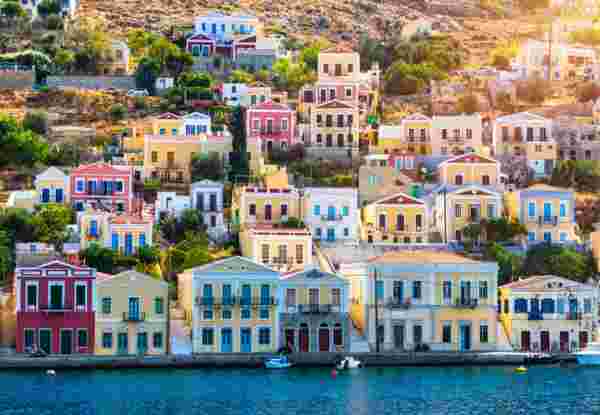
Symi, Greece: What It Costs, How to Get There, Who It Suits
READ MORE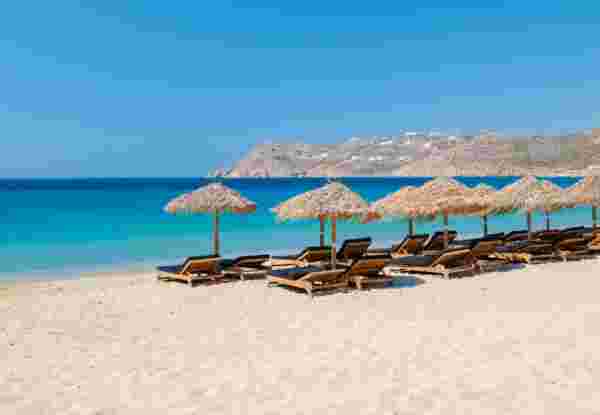
Paradise Beach Mykonos: The Complete Guide
READ MORE
Greece in the Fall
READ MORE
Rome Travel Guide: What to Do, When to go and Where to Go
READ MORE